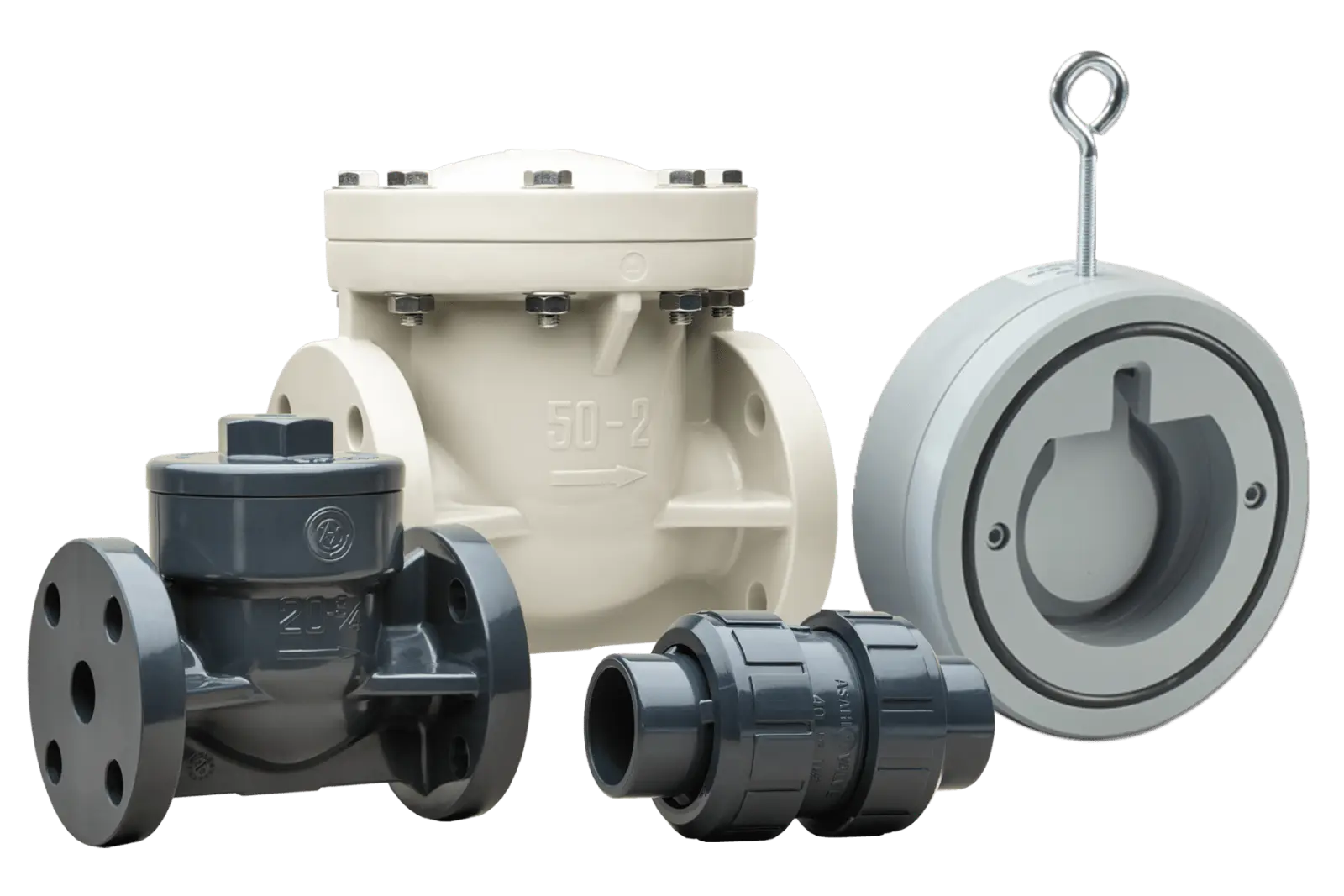
Check Valve for Municipal Water
30+ years spec experience. Send James the process data and get a real answer — not a catalog page.
Request a Spec Review →Yes. LibertyCES has documented Check Valve in Municipal Water applications, including Asahi Ball Check Valve. The right model depends on the fluid, concentration, temperature, flow and duty cycle, so send James your process data for a free spec review before final selection.
Notes from the vendor documentation
Listed alongside water-treatment piping applications, not a dedicated case study.
Products cited in this application
Real Specifications
| Spec | Value | Source document |
|---|---|---|
| System pressure rating | 150 psi @ 68°F, Chem Proline pipe/valve system (includes Ball Check Valve) | Asahi/America — Advanced PE Industrial Piping Systems (Chem Proline / Chem Prolok / Poly-Flo) |
| Pipe material | Black PE resin, cell classification PE445584C, conforms to PAS 1075 | Asahi/America — Advanced PE Industrial Piping Systems (Chem Proline / Chem Prolok / Poly-Flo) |
The Ball Check Valve here isn't a standalone product pick — it's part of the same Chem Proline system engineered to the same 150 psi / 68°F rating as the pipe and butterfly valve around it, which is the actual point: a check valve that doesn't match the rest of the line's pressure class is where a water-treatment system's weak link hides.
Every claim on this page traces to real, vendor-published documentation on file with LibertyCES. Confirm current specifications with the manufacturer before final specification.
Related Guides
FAQ
How is Check Valve used in Municipal Water?
Listed alongside water-treatment piping applications, not a dedicated case study.
Which Check Valve models are specified for Municipal Water?
Documented models include Asahi Ball Check Valve. Confirm current specifications with the manufacturer before final selection.
What does LibertyCES need to size Check Valve for a Municipal Water application?
The fluid and its concentration, operating temperature, flow or volume, pressure and suction conditions, duty cycle, and the existing equipment it replaces or connects to. James reviews it for free.
Ready to buy or need a fast answer? Call, text, or email James directly — (559) 395-5500 · [email protected].
Send James your spec
Fluid, concentration, temperature, flow or volume, and where it goes. James replies with a real answer, not a catalog page.
Reviewed by James Riggins, 30+ years specifying water and chemical process equipment · Updated