Storage, matched to the chemistry — not the catalog page
Storage tanks, dual containment, brine tanks, and wastewater tanks, selected against your fluid's real concentration, temperature, and reactivity profile.
Storage & containment categories
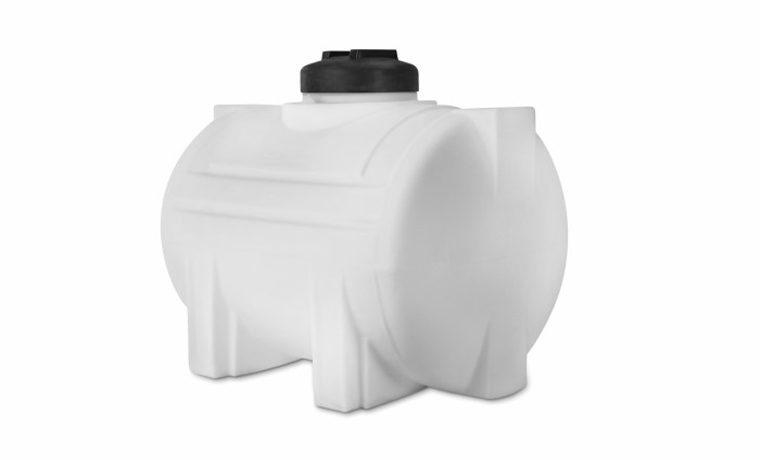

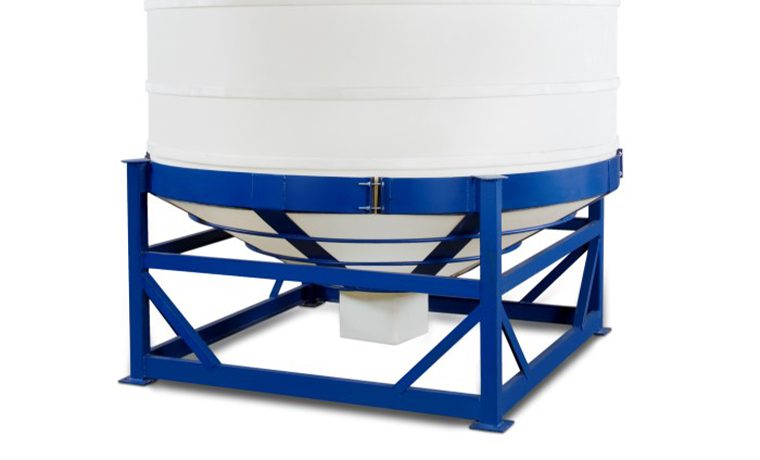


Where LibertyCES specs Storage & Containment equipment
Frequently Asked Questions
Why do two tanks labeled the same material fail differently?
For sodium hypochlorite storage, the resin used in the tank's interior liner — not the base material label — determines chemical resistance. Vinyl ester resin has meaningfully better resistance to oxidizers like NaOCl than isophthalic polyester, and the resin-rich interior liner (a C-veil surface layer) is what actually contacts the stored chemical, not the structural shell behind it. Two tanks can both be quoted as 'FRP' while only one has the correct liner spec.
How is polyethylene tank wall thickness actually calculated?
ASTM D1998-21 governs one-piece seamless rotationally-molded polyethylene tanks (500 gallons and up) with a specific wall-thickness formula based on service temperature, fluid specific gravity, fluid height, and tank diameter. Poly Processing applies a maximum hoop stress of 600 psi at 100°F, derated for higher temperatures using a 0.475 service factor — this is a real engineering calculation, not a generic gauge chart.
What should be confirmed before ordering a chemical storage tank?
Four items: resin/material certification with real service-rating documentation (not a verbal claim), the actual operating temperature vs. the resin's rated temperature, UV exposure protection for outdoor installation, and the vendor's stated design life at your actual chemical concentration — not a generic industry figure.
Why does tank failure from chemical exposure often show up years later, not immediately?
Resin/material degradation from chemical exposure is a slow attack on the polymer, not a sudden event. Micro-cracking and breakdown accumulate beneath a surface that can look completely fine for years without internal inspection — by the time visible symptoms (weeping, blistering, wall thinning) appear, the tank has often already lost a real fraction of its design life.
Send LibertyCES the process data, not a part number
Fluid, chemistry, concentration, temperature, flow, pressure, line size, and current equipment — that's what a real spec review needs to start.
Ready to buy or need a fast answer? Call, text, or email James directly — (559) 395-5500 · [email protected].