Industrial Wastewater & Chemical Feed Systems — Field-Proven Case Studies
Liberty Chemical & Equipment Supply (LibertyCES) engineers chemical feed skids, industrial wastewater treatment systems, chemical transfer packages, and industrial water filtration systems for plants that can’t afford failures, fines, or downtime. Built around one standard: zero-guesswork specifications.
Direct answer: A reliable industrial fluid system isn’t “a pump” — it’s an engineered outcome: correct materials, containment, controls, and instrumentation matched to your chemistry and regulatory reality. These case studies show exactly how LibertyCES reduces shutdowns, stabilizes dosing, and protects compliance.
Chemical Transfer
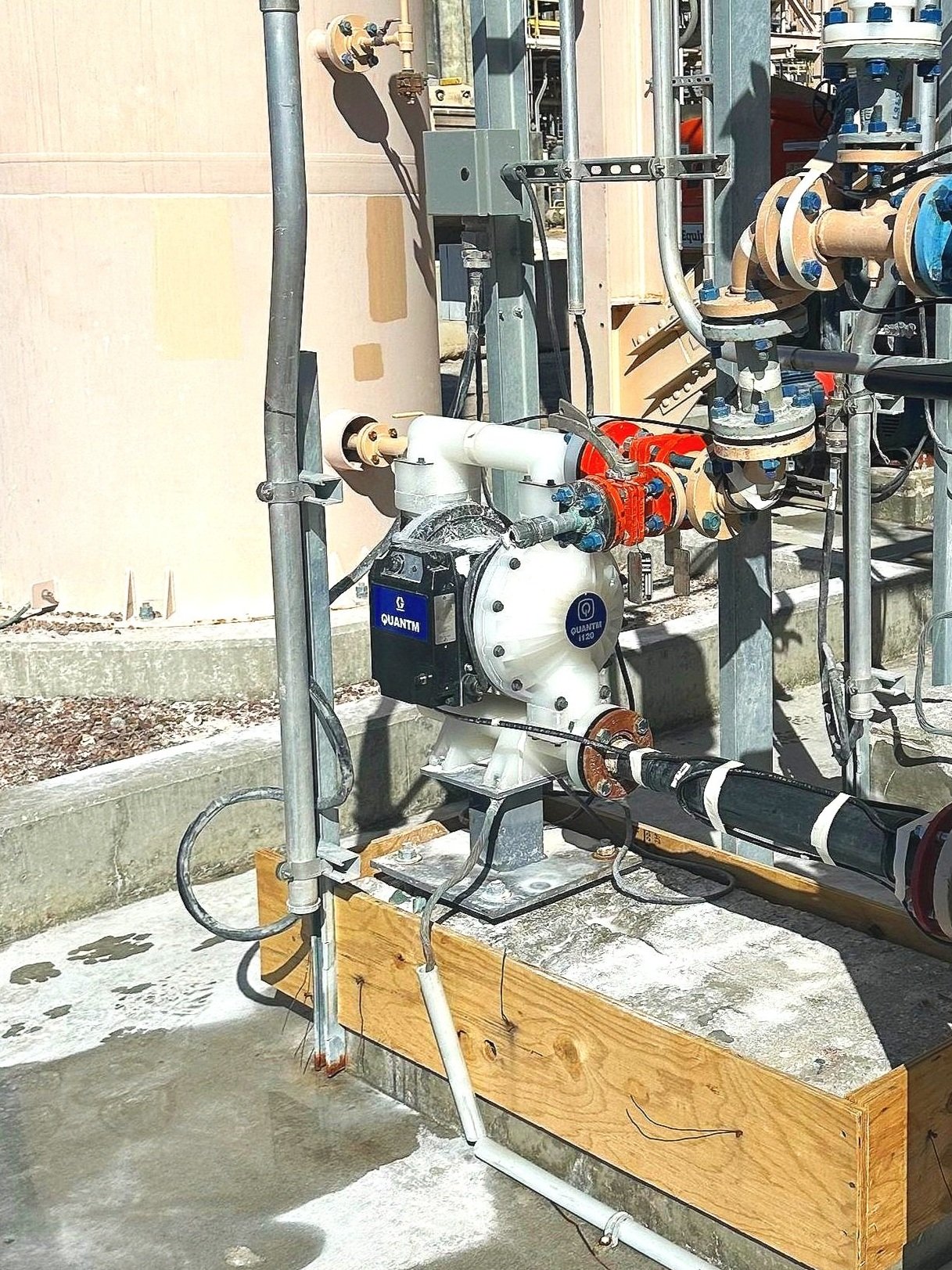
Chemical Transfer & Slurry Transport — QUANTM Electric Pump
Engineered chemical transfer skid for high-solids slurry. Replaced air-operated units to reduce energy consumption (up to 80–91%) while maintaining continuous duty cycles and SCADA control.
Storage & Safety
HCl Vapor Containment & Chemical Storage Safety
Compliance-focused scrubber design engineered for hazardous chemical storage environments. Tuned airflow + dosing logic with redundant pH control for stable, inspection-friendly operation.
Wastewater
Industrial Wastewater Treatment System — Automated pH Neutralization
Turnkey pH dosing and controls engineered to hold compliance under real plant conditions. Clean signal chain, probe protection, and SCADA integration with measured chemical reduction (~24%).
Chemical Feed
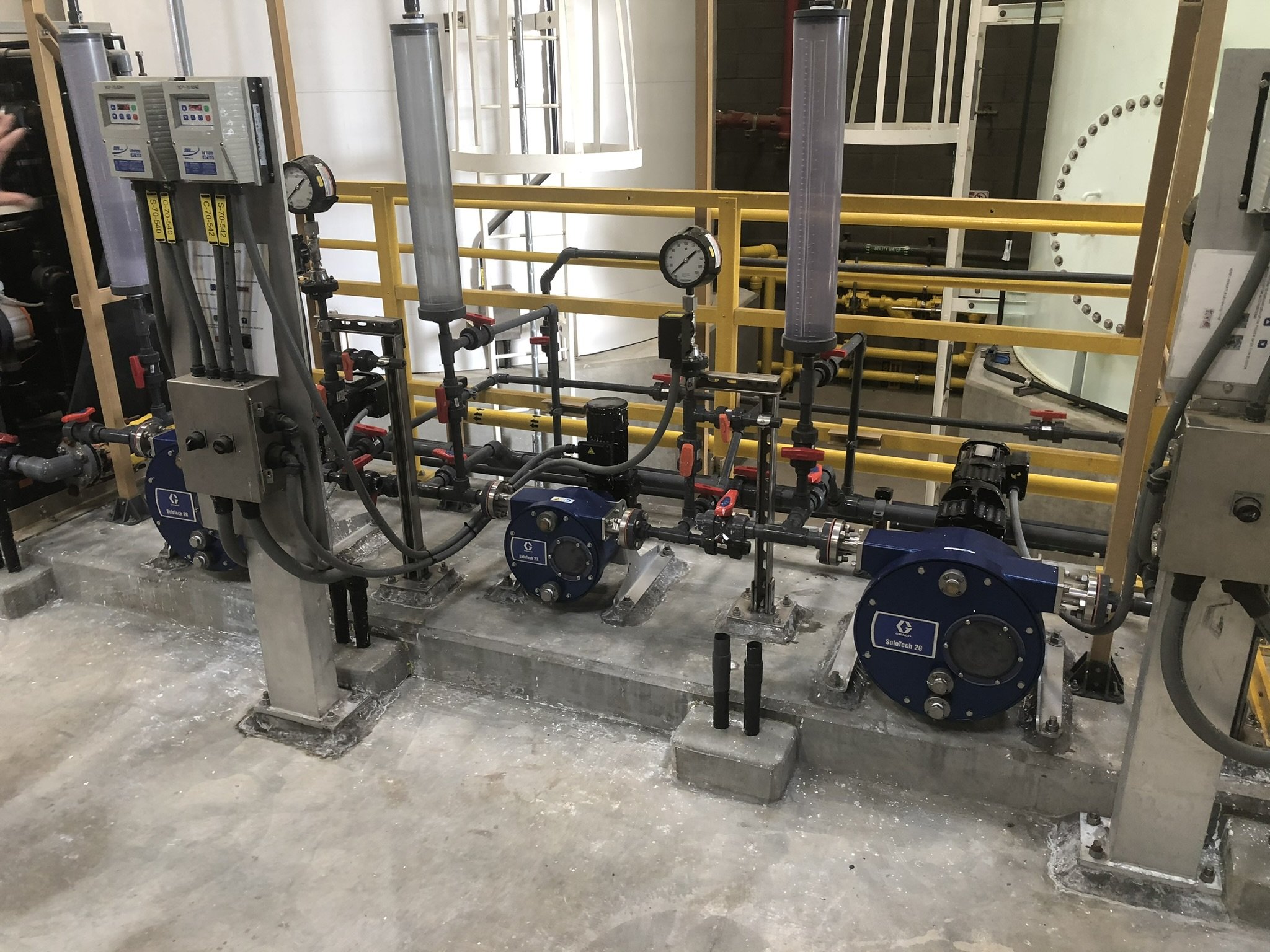
City Water Treatment — SoloTech™ Hose Pump for Lime Slurry
Calcium hydroxide (Ca(OH)₂) hard-sets during pauses — “concrete in the line.” LibertyCES matched chemistry to mechanics: single-roller compression + reversible clearing to eliminate clog shutdowns.
Water Filtration
Industrial Water Filtration — UV + Resin Softening System
Conditioning train engineered for stable blending: UV disinfection + resin softening with protective rinse cycles to keep media healthy and process water consistent.
Instrumentation
Instrumentation & Monitoring — Radar Level + Alarms + Interlocks
Clean, non-contact level measurement engineered to drive real actions: pump interlocks, hi/lo alarms, and remote visibility without fouling or drift.
Engineered outcomes — not parts.
LibertyCES designs skid-mounted chemical feed systems, industrial wastewater treatment systems, chemical transfer pump skids, OSHA-minded chemical storage packages, and industrial water filtration systems with the controls, containment, and instrumentation required for real plants. If your process involves corrosives, caustics, slurry, pH adjustment, or compliance risk — this is what “spec’d right” looks like.
Your spec should run right the first time.
Send your process notes, setpoints, chemicals, temperatures, and constraints. James will recommend a clean, compliant design and the exact components to match — no guesswork, no silent failures.
Request Expert GuidanceEngineering FAQ: Industrial Fluid Systems
These are the exact questions engineers and operators ask when evaluating chemical feed skids, chemical storage, industrial wastewater treatment, and industrial water systems. We answer directly — then add the nuance that prevents failures.
What is the difference between a septic tank and an industrial wastewater treatment system?
A septic tank is a passive collection method, while an industrial wastewater treatment system is an active, engineered process. LibertyCES systems use real-time pH adjustment, precipitation/neutralization strategies, and filtration to condition water for compliant discharge or reuse.
What are the OSHA requirements for chemical storage and transfer?
OSHA requirements vary by chemical and site conditions, but they commonly drive needs like secondary containment, ventilation considerations, labeling/communication, and safeguards that reduce exposure and spill risk. LibertyCES designs focus on containment-minded layouts, compatible materials, and control logic that prevents incidents.
How does a chemical feed skid system work?
A chemical feed skid automates precise dosing into a process stream using metering or transfer pumps, sensors (flow, pH, level), and a control panel. LibertyCES builds skids to regulate concentration automatically, avoiding over-dosing, under-dosing, and unstable pH swings.
Can industrial wastewater be reused?
Yes — many applications can reuse water with an industrial water filtration system designed around the contaminant load. Depending on the goal, stages may include screening, pH conditioning, media filtration, ultrafiltration (UF), and reverse osmosis (RO) to reclaim water for cooling, wash-down, or process makeup.
What is the lifespan of a chemical transfer pump?
Lifespan depends on chemical compatibility, solids content, duty cycle, and control strategy. In many sites, electric-operated diaphragm pumps can extend maintenance intervals versus air-operated designs by reducing mechanical stress, improving control, and eliminating air system issues — especially in continuous duty service.
How much does an industrial water treatment system cost?
Cost depends on flow (GPD), chemistry, required effluent quality, redundancy needs, and controls. The right system often pays back through reduced downtime, stabilized compliance, and lower chemical consumption. LibertyCES scopes systems to the application first — then engineers the most efficient path to the requirement.
What constitutes “industrial water” vs. domestic water?
Domestic water is meant for human consumption. Industrial water is conditioned to protect equipment and product quality (hardness, chlorides, silica, and other constituents that damage boilers, cooling towers, and process equipment). LibertyCES designs conditioning systems around the damage mechanisms — not guesses.
Why use a skid-mounted chemical feed system?
Skid systems are pre-plumbed, pre-wired, and factory-tested to reduce install time and commissioning risk. The footprint is cleaner, troubleshooting is faster, and the controls/containment details are designed as a single integrated system.