Double-Wall Secondary Containment Tanks
110% Built-In. Audit-Clean. Stop Guessing with Berms.
James Riggins specifies containment, monitoring, fittings, and seismic/wind anchorage for double-wall tank systems — so you meet EPA/SPCC without external dikes and pass audits.
By James Riggins, Lead Engineer, Liberty Chemical & Equipment Supply, Inc.
30+ years spec experience. Send James the process data and get a real answer — not a catalog page.
Request a Spec Review →The James Factor: Double-Wall Specs That Don't Leak, Warp, or Fail Audits
James matches containment path, venting/monitoring, fittings, anchors, and materials — so your tank stores clean, alarms correctly, and passes audits first time. A 110% interstitial containment path replaces external dikes and rain/debris management with clean, enclosed containment.
- 110% Interstitial Containment — No External Dike Needed
- Primary & Interstice Vents, Leak Port & Alarm Provision
- Top-Draw / UFO™-Style Seals
- Engineered Anchor Patterns, Stamped Calcs Available
- XLPE/HDPE/PP Matched to Chemistry — PP to ~200°F
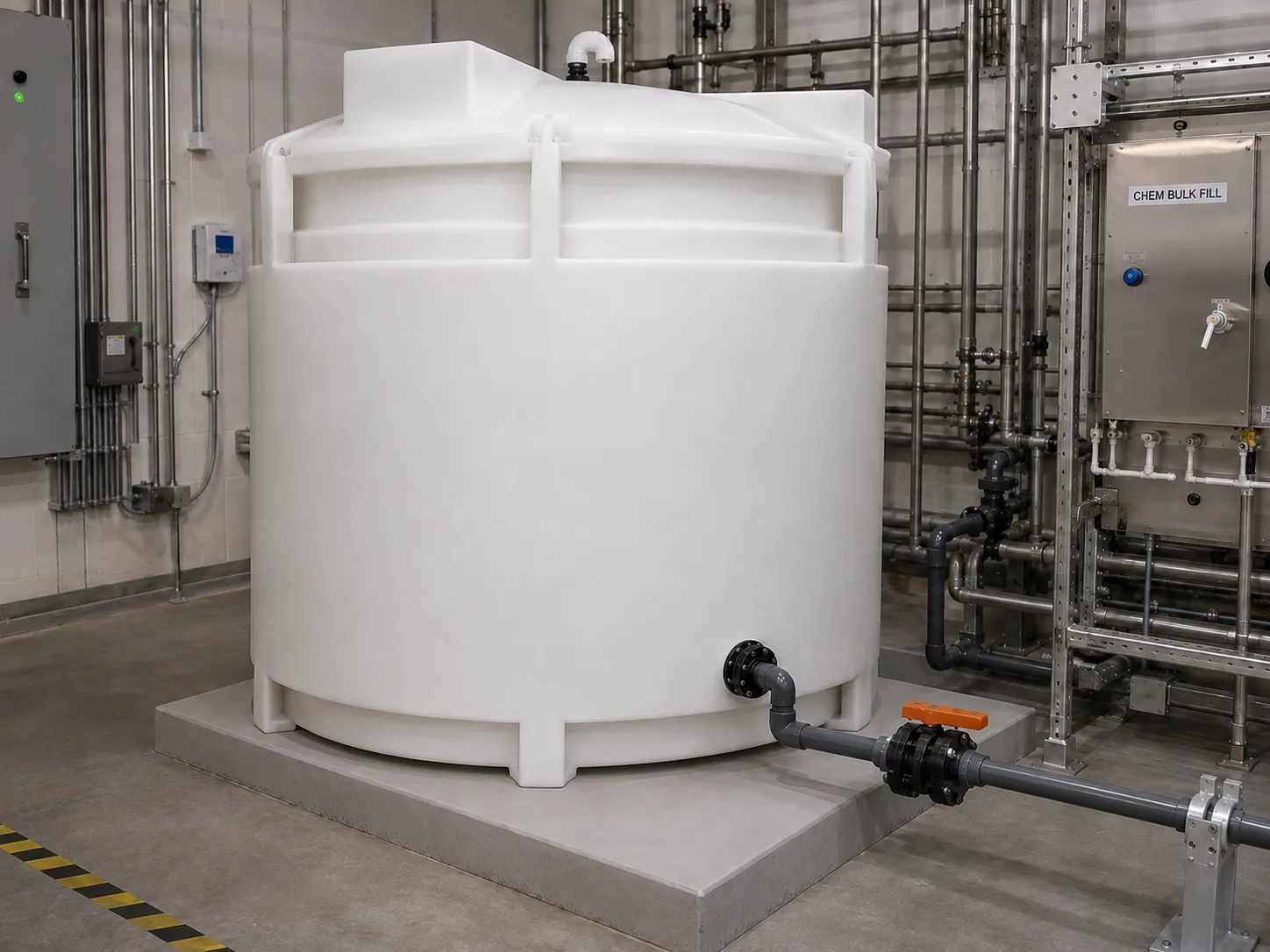
A double-wall XLPE bulk chemical storage tank on its containment pad, with a real bulkhead outlet fitting and dedicated chemical fill station — the 110% interstitial containment path described above, installed.
Frequently Asked Questions
What does 110% containment mean for a double-wall tank?
It means the interstitial space between the inner and outer tank walls is sized to hold 110% of the primary tank's volume — meeting EPA/SPCC requirements without needing an external dike or berm.
How does a double-wall tank alarm on a leak?
Primary and interstice vents include leak port and alarm provisions, so a breach in the inner wall is detected in the enclosed interstitial space before any material reaches the environment.
What materials are used in double-wall tank construction?
XLPE, PP, or HDPE depending on the chemistry and duty — polypropylene handles up to ~200°F, while XLPE and HDPE suit a broader range of standard chemical storage.
Get your tank spec'd against real chemistry, not guesswork
Send LibertyCES the chemical, concentration, temperature, and duty cycle — we'll help match resin, wall thickness, fittings, and containment.
Ready to buy or need a fast answer? Call, text, or email James directly — (559) 395-5500 · [email protected].