Semiconductor & High-Purity Manufacturing
Ultrapure water, cleanroom-manufactured piping, and pure-chemical delivery for wafer fabrication, photovoltaic production, and other high-purity manufacturing environments — real manufacturer capability, not a generic industry claim.
The Zero-Guesswork Specification Framework
7 gates — Fluid, Hydraulic, Material, Purity, Containment, Instrumentation, Controls — plus the Assumption Register and a field-ready Equipment Tag. Free download.
Three Problem Types in Semiconductor Fluid Handling
Ultra-High-Purity (UHP) Fluid Handling
UPW, WFI-grade water, and pure chemical delivery require piping, tubing, and pumps built and manufactured in a controlled cleanroom environment — not just chemically resistant material, but low-leachout, low-particulate construction from the resin up.
Semiconductor-Grade Process Chemistry
Etch, clean, and rinse chemistries move through the same wetted path as UPW — the wetted material has to survive both the aggressive process chemical and the purity requirement simultaneously.
UPW Generation & Instrumentation
Producing and monitoring ultrapure water at the volumes a fab requires — CEDI/EDI systems, conductivity sensing at parts-per-billion sensitivity, and containment for every wetted connection.
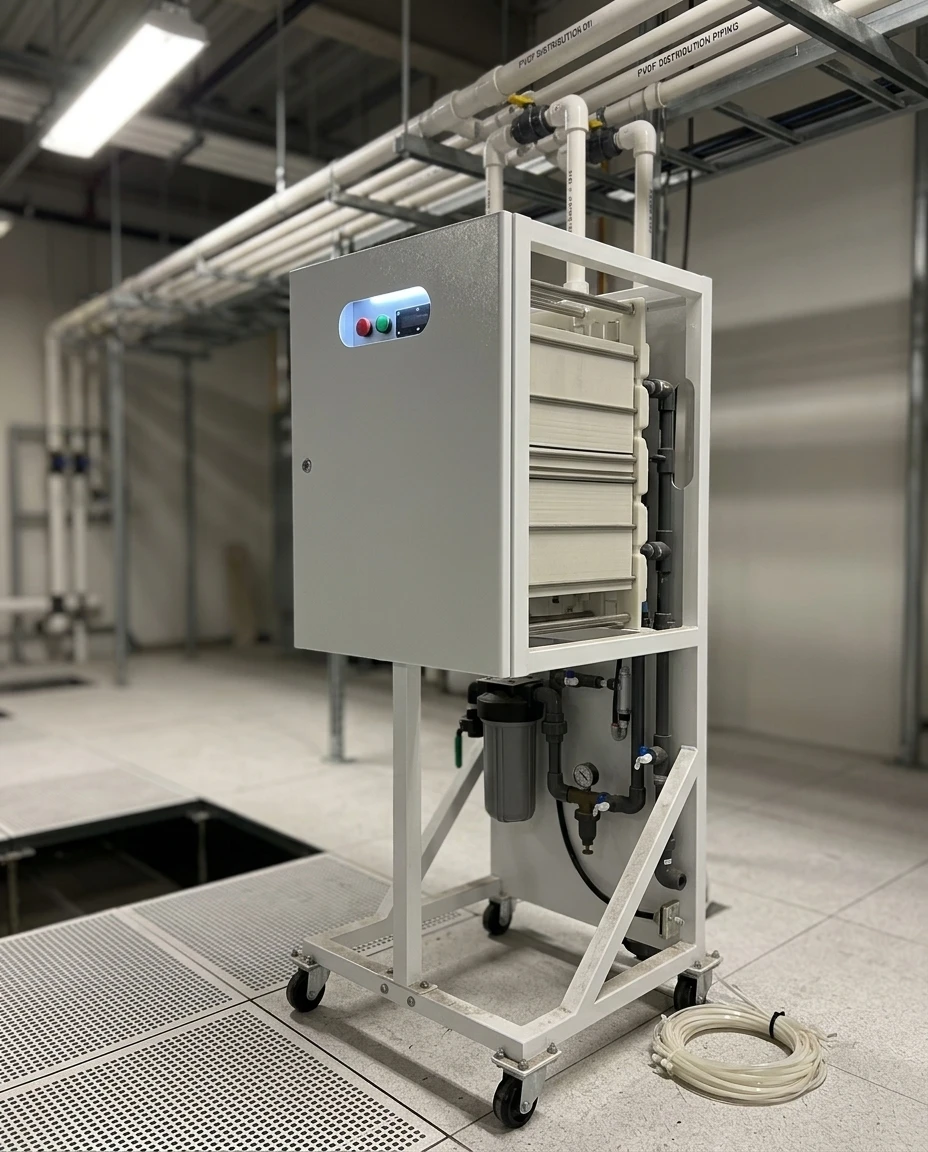
A Real AXEON Semiconductor UPW System, Stage by Stage
Pretreated feed water through an AXEON RDP-Series double-pass RO system, an AXEON EDI-Series electrodeionization stage, and final polishing (UV/UF/microfiltration) to a point-of-use UPW quality monitor — the same specification-layered architecture referenced throughout this page.


Real Semiconductor & High-Purity Capable Manufacturers
Ranked by depth of documented semiconductor-specific capability — from dedicated cleanroom-manufactured product lines to named-industry instrumentation.


Common Fab-Grade Failure Modes We Catch Before They Cost a Lot
Real failure mechanisms LibertyCES specifies around, not generic reliability claims — each one a spec-stage decision that either gets caught before installation or costs a lot more after.

Why a correctly-rated pneumatic bellows pump can still shear a slurry suspension into a wafer defect — and the mag-drive fix.
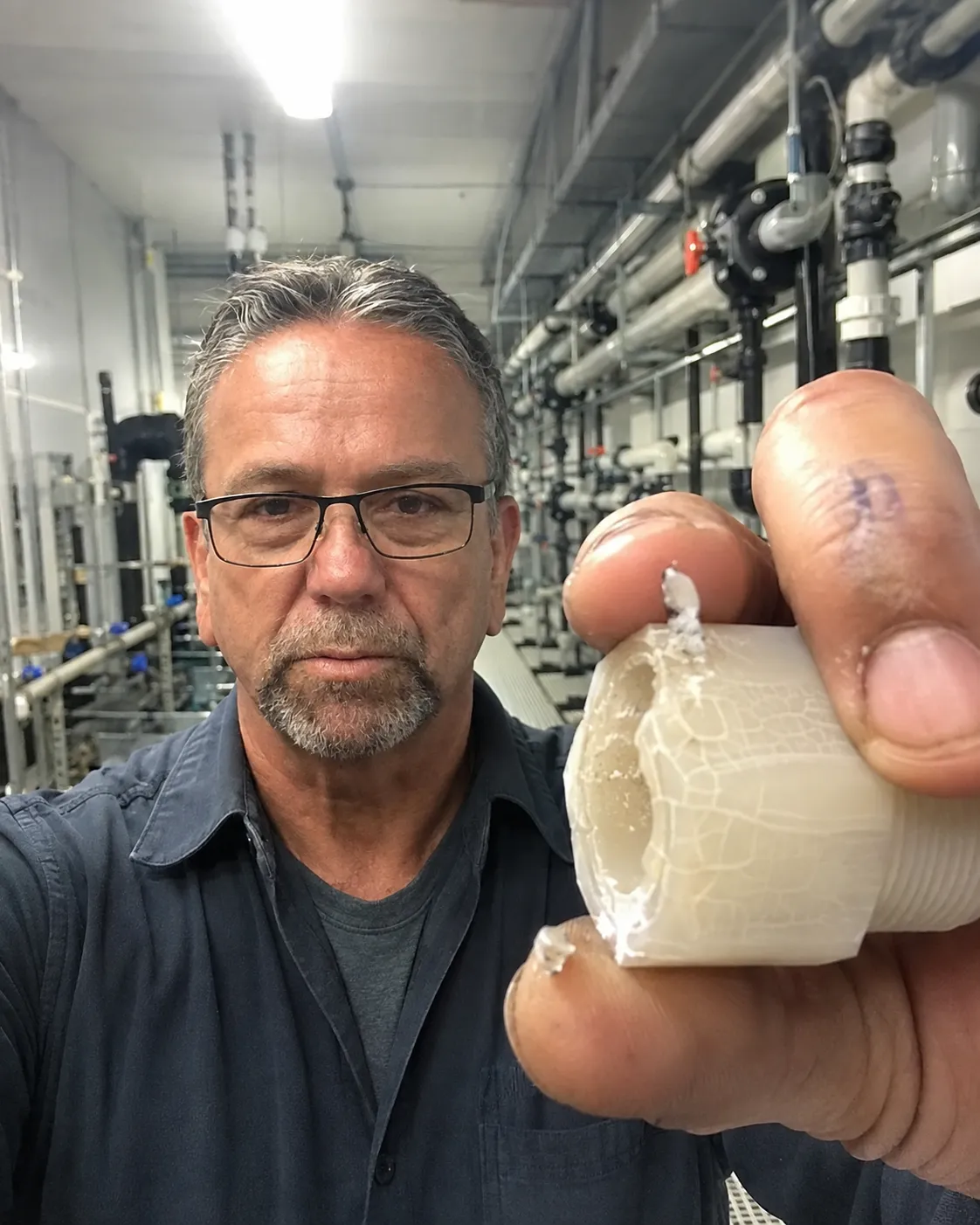
Why "same resin on the cut sheet" doesn't mean qualified — the extractables gap and what to ask before approving a substitution.

SSiC bearings fail in under 2 minutes without fluid lubrication — the failure sequence and a $200 interlock fix.

Sealless doesn't mean failure-proof. The 9-layer protection stack, with real Finish Thompson M20 power monitor specs.

Housings sized to nominal flow instead of peak simultaneous draw blind fast and read as a maintenance problem when it's a spec problem.

12 questions that separate a real high-purity/process-safety vendor from a catalog reseller — SEMI F57/F41, ISO 14644-1, ISO 9001, HAZOP/DHA, and CAPA.
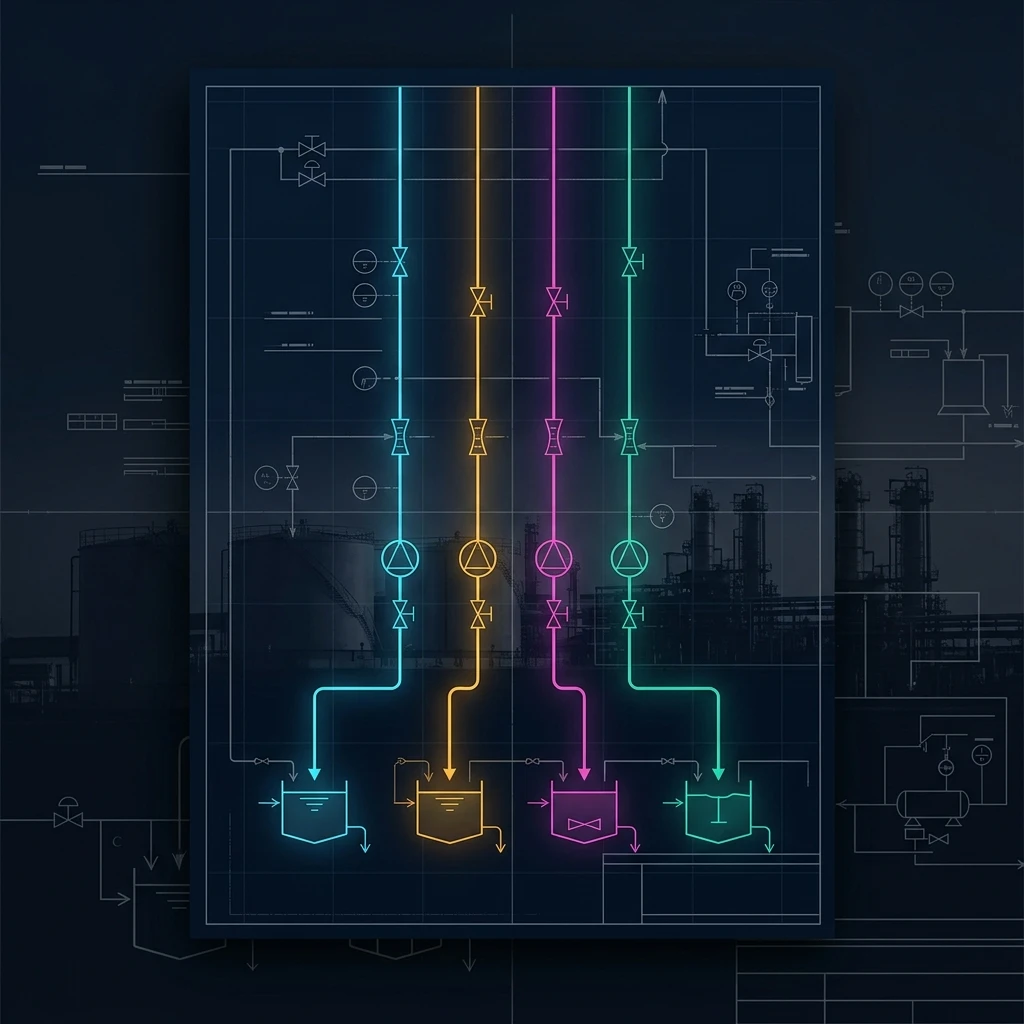
Fluoride, metals, CMP slurry, and ammonia each need different treatment chemistry — the real segregation and treatment-train reference.
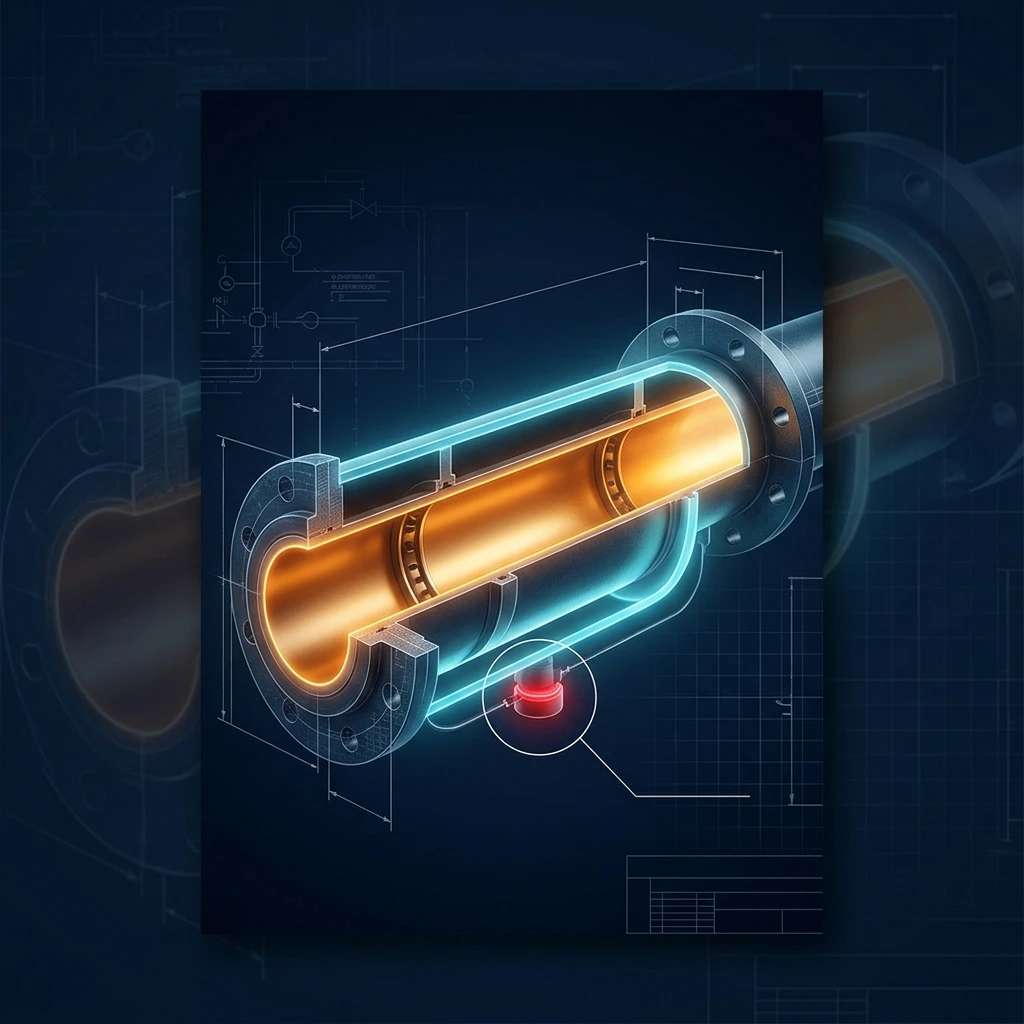
The annular space is its own engineered system — real Asahi Duo-Pro and Icon leak-detection specs.

Real Blue-White CHEM-FEED skid families and Griffco accessories — what's actually inside a factory-tested dosing skid.

Facilities and utility chemical dosing — wastewater, scrubbers, cooling — never wafer-contact. Real Blue-White metering pump and flow-verification specs.

Real MS6 factory-calibrated chemistry list and material compatibility ratings matched to neutralization, coagulation, and oxidant dosing points.

A pump running isn't proof chemical was delivered. Real TFD, DFD, and MS6 flow-verification specs that close the gap.

Two pumps on a skid isn't automatically redundancy. The real failover sequence engineered around Blue-White's duplex hardware.

CFPS vs. CFCS vs. CFWS — real material, mounting, and flow-meter-option differences, decision-table format.
Where facilities chemical dosing ends and SEMI-qualified wafer-contact UHP chemical delivery begins — stated plainly.

Packed-bed scrubber architecture — real Perry Fiberglass APOLLO/OMEGA/ODYSSEY series specs.

5 distinct roles — pretreatment, deionization, UPW polishing, selective removal, wastewater polishing — plus real AXEON EDI-Series specs.
Where We Draw the Line
Wet chemical infrastructure vs. specialty gas systems — a deliberate scope boundary, stated plainly.

A decision table for transmitters, add-on modules, and conductivity/resistivity sensors — sourced from GF Signet's own documentation.
Semiconductor-Named Product Lines, By Manufacturer
Full specs, pricing, and real named applications for the specific product lines each manufacturer names for semiconductor or high-purity service — not just the manufacturer-level overview.

Class 1000 (ISO 6) cleanroom-manufactured PVDF, 20–315mm, 230 psi standard / 150 psi thin-wall. Named for UPW, WFI, semiconductor, and photovoltaic service.

PE100-RC, SDR 11, AGRU-manufactured, H2 Ready. Real 2015 installation: replaced failing CPVC in 50% caustic service for a semiconductor OEM.

Single-channel (9900) vs. up to 6-channel (9950), plus all 6 real field-installable modules — Relay, Batch, Direct Conductivity/Resistivity, H COMM, 4-20mA Output, PC COMM.
2818-2823 and 2839-2842 electrodes, explicitly named for semiconductor water production, rated to the 18.2 MΩ-cm UPW benchmark.
AXEON, Richter Chemie-Technik, and GORE are on the manufacturer roster above with pillar-level detail — dedicated deep-dive pages for their semiconductor-specific product lines are in the build pipeline.
Purad UHP PVDF — Asahi/America's Named Semiconductor Piping Line
Purad is Asahi's premier product for high-purity water systems, built from SOLEF PVDF resin through a stringent cleanroom manufacturing process to deliver low-leachout piping. Manufacturer-named applications: ultra-pure water (UPW), water for injection (WFI), semiconductor manufacturing, photovoltaic production, pharmaceutical processing, and nanotech.
| Standard range | 20–315mm (½"–12"), SDR 21, rated 230 psi |
| Thin-wall option | 90–315mm (3"–12"), SDR 33, rated 150 psi — cost savings at larger sizes |
| Resin | SOLEF PVDF, cleanroom-manufactured for low leachouts |
| Welding methods | IR (non-contact butt), beadless, and electrofusion — compatible with Asahi's SP-series fusion welding equipment |
| Component range | Includes zero-deadleg valves and pressure regulators purpose-built for high-purity systems |
Semiconductor & High-Purity Manufacturing FAQs
Which LibertyCES manufacturers can supply semiconductor and high-purity fluid handling equipment?
Five real, named sources: Asahi/America (cleanroom-manufactured Purad PVDF/PP-Pure/PolyPure high-purity piping plus Dymatrix wet-process valves), AXEON (CEDI/EDI ultrapure water systems), Richter Chemie-Technik (magnetic-drive pumps rated for semiconductor/photovoltaic service), Georg Fischer/GF Signet (semiconductor-water instrumentation), and GORE (semiconductor-rated ePTFE gasket sealing).
What makes piping "semiconductor grade" versus standard chemical-resistant piping?
It's not just chemical resistance — it's manufacturing process. Asahi's Purad PVDF line is produced through a Class 1000 (ISO 6) cleanroom specifically to keep leachouts and particulate contamination below the threshold UPW and WFI applications require. Standard chemical piping resists the same chemistry but isn't manufactured to that cleanliness standard.
Does Asahi/America have a documented semiconductor installation?
Yes — a 2015 project replaced failing CPVC pipe spools with 1/2" Chem Proline (Advanced PE) spool pieces in 50% caustic service for a semiconductor OEM, fitted to the OEM's existing enclosure without a redesign. This is a real, sourced installation, not a generic capability claim.
What is the difference between Purad, PP-Pure, and PolyPure?
Purad is Asahi's UHP PVDF line. PP-Pure and PolyPure are both polypropylene high-purity lines. All three are manufactured through the same Class 1000 cleanroom and paired with a dedicated High Purity Accessories line — the material choice depends on the specific chemistry and temperature the application requires.
Specifying a Semiconductor or High-Purity System?
Send LibertyCES the actual chemistry, purity requirement, cleanroom classification, and flow/pressure conditions — we'll verify which real manufacturer and configuration fits before you spec the system.