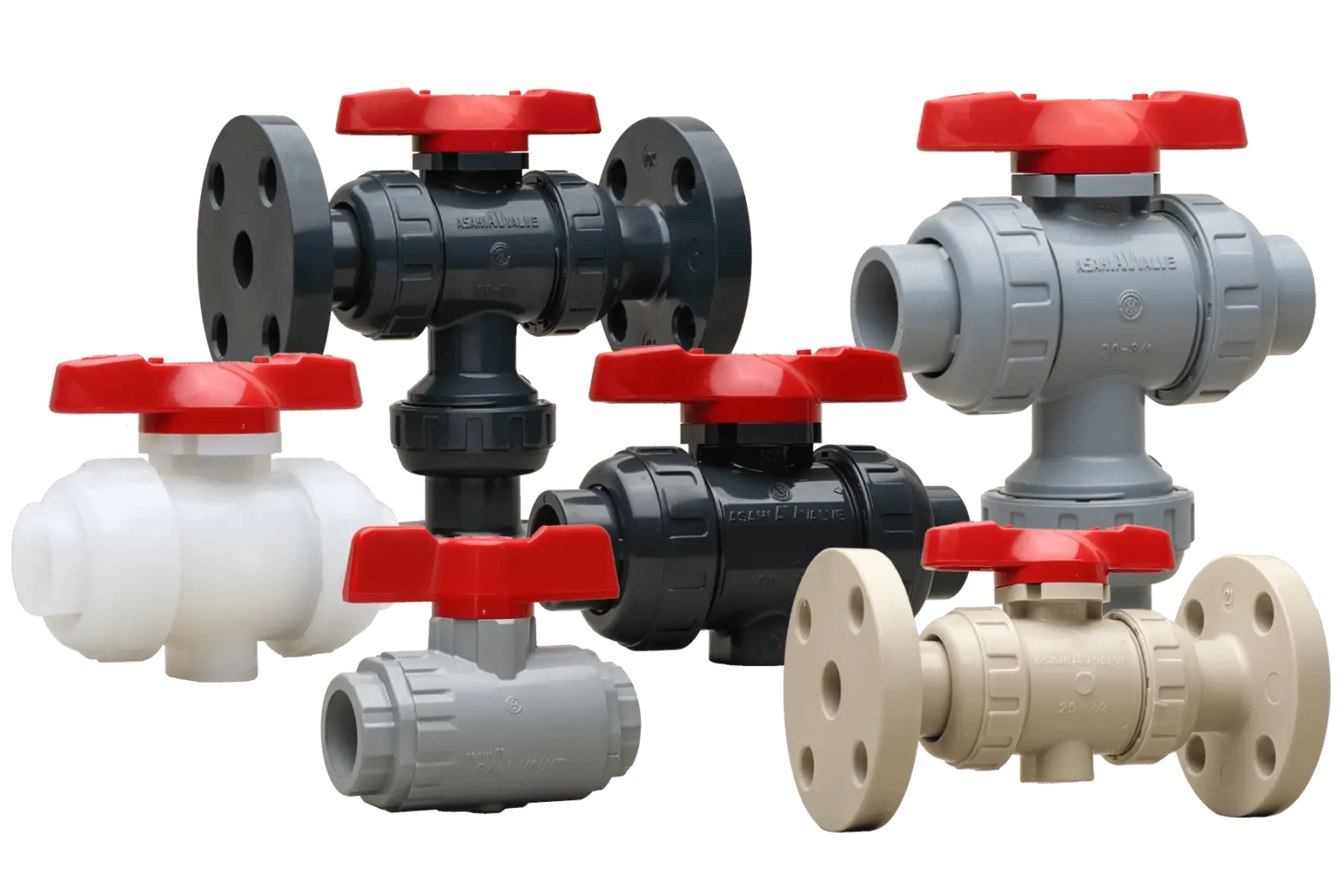
Ball Valve — Salts/Brines
30+ years spec experience. Send James the process data and get a real answer — not a catalog page.
Request a Spec Review →Named chemicals
LibertyCES has documented Ball Valve in Salts/Brines service, including Brine and Sea Water. Wetted materials to confirm: PFA and 316SS. Documented models include Crane XLB Lined Ball Valve and Netafim ball valves. Compatibility depends on exact concentration, temperature and duty cycle, so confirm with a free spec review.
Notes from the vendor documentation
Crane's own 8-chemical reference table (repeated across its lined-valve family) names Brine and Sea Water explicitly.
Materials documented for this service
- PFA
- 316SS (chloride pitting risk)
Products cited for this service
Real Specifications
| Spec | Value | Source document |
|---|---|---|
| Crane XLB/XLD shared chemistry list | Names Brine and Sea Water explicitly among the family's 8-chemical reference table (Chlorine, Brine, Benzene, Bromine, Sulfuric Acid, Nitric Acid, Hydrochloric Acid, Phosphoric Acid, Sea Water) | Crane ChemPharma & Energy — XOMOX Lined Valves |
| Netafim ALD70 salt-water rating | Salt Water/Sea Water (NaCl/H2O) rated to 70°C max on the mining diaphragm-valve chemical resistance chart | Netafim Mining — Heap Leaching Products Catalog |
316SS in continuous brine or sea water service is a chloride-pitting risk over time — the standard reason Crane locks a PFA or PTFE liner between the chloride stream and the ball valve's structural metal rather than relying on the stainless surface alone.
Chloride pitting is a slow, easy-to-miss failure mode compared to acid corrosion — Crane's PFA/PTFE-lined ball valve line exists specifically because the lining, not the structural body alloy, is what actually has to survive continuous brine contact.
Every material and product claim on this page traces to real, vendor-published documentation on file with LibertyCES. Chemical compatibility depends on exact concentration, temperature, and duty cycle — confirm current specifications with the manufacturer and request a spec review before final specification.
FAQ
Can Ball Valve handle Salts/Brines?
Crane's own 8-chemical reference table (repeated across its lined-valve family) names Brine and Sea Water explicitly.
What wetted materials should Ball Valve use in Salts/Brines service?
Materials documented for this service: PFA, 316SS (chloride pitting risk). Compatibility depends on exact concentration, temperature and duty cycle, so confirm with a spec review before final specification.
Which Salts/Brines chemicals does this cover?
Named chemicals in this documentation: Brine, Sea Water.
Which Ball Valve models are documented for Salts/Brines?
Documented examples include Crane XLB Lined Ball Valve, Netafim ball valves (heap leach).
Ready to buy or need a fast answer? Call, text, or email James directly — (559) 395-5500 · [email protected].
Send James your spec
Fluid, concentration, temperature, flow or volume, and where it goes. James replies with a real answer, not a catalog page.
Reviewed by James Riggins, 30+ years specifying water and chemical process equipment · Updated