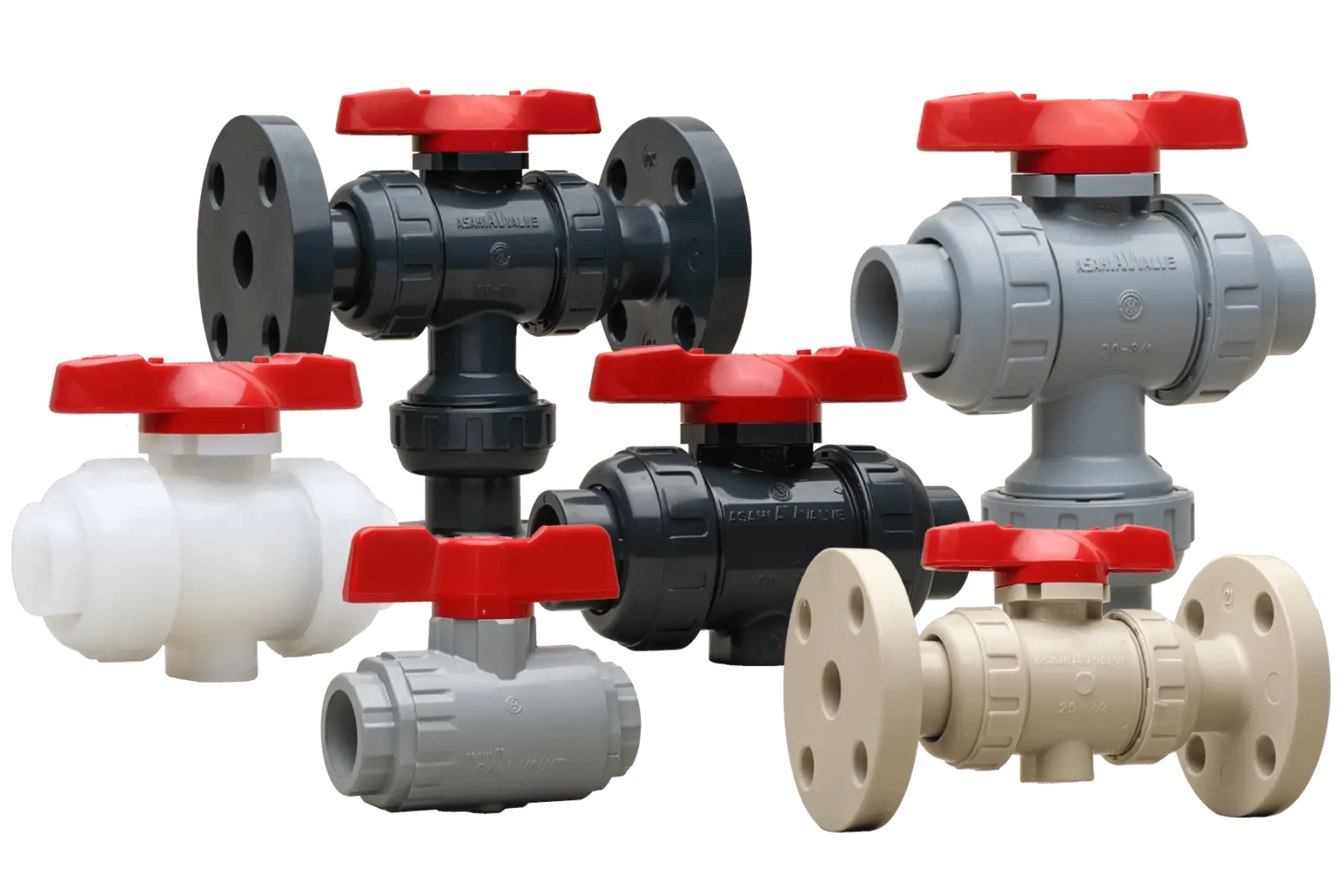
Ball Valve — Oxidizers/Disinfectants
30+ years spec experience. Send James the process data and get a real answer — not a catalog page.
Request a Spec Review →Named chemicals
LibertyCES has documented Ball Valve in Oxidizers/Disinfectants service, including Sodium Hypochlorite, Chlorine and Bromine. Wetted materials to confirm: PVDF/PP/CPVC, EPDM and 316SS. Documented models include Hayward TBH-Z and AVCO Chlorine Service Ball Valve. Compatibility depends on exact concentration, temperature and duty cycle, so confirm with a free spec review.
Notes from the vendor documentation
Twelfth cross-vendor confirmation (per Hayward's own tracking) of vented-ball/EPDM-derate pattern for sodium hypochlorite off-gassing.
Materials documented for this service
- PVDF/PP/CPVC (Excellent)
- EPDM (derates from B to C when fully exposed)
- 316SS (poor)
Products cited for this service
Real Specifications
| Spec | Value | Source document |
|---|---|---|
| Hayward TBH-Z pressure rating | 250 PSI/16 Bar (1/2"-2"), 235 PSI/16 Bar (2-1/2"-4"), 150 PSI/10 Bar (6"), all non-shock @70°F | Hayward Flow Control — Water/Waste Treatment Guide |
| AVCO Chlorine Service Ball Valve materials | Carbon steel (WCB) body; ball/stem/retainers in Monel 400 or Hastelloy C; complies with Chlorine Institute Pamphlet 6, Service Classes I & IV | AVCO Valve — Chemical Processing segment page |
| Asahi vented ball valve | Factory-equipped 1/8" vent hole specifically to prevent off-gas buildup in sodium hypochlorite service | Asahi/America — General Catalog (Valves, Actuators, Piping Systems, Welding Equipment) |
| Crane XLB fugitive-emissions rating | ISO 15848 + TA-LUFT 2021 compliant, under 20ppm after 4 thermal cycles + 2500 mechanical cycles; names Chlorine and Bromine in its shared chemistry list | Crane ChemPharma & Energy — XOMOX Lined Valves |
AVCO's Chlorine Service Ball Valve is vented specifically to provide pressure relief during operation — the same off-gassing failure mode that drives Hayward's TBH-Z vent hole, here applied to chlorine gas/liquid rather than sodium hypochlorite; a standard non-vented ball valve on either chemistry risks crystallization/pressure buildup in the cavity.
Sodium hypochlorite and chlorine gas fail a standard ball valve the same way — off-gassing trapped in an un-vented cavity — and three separate vendors (Hayward, AVCO, Asahi) engineer around it with the identical fix: a drilled or vented ball. That convergence is the real signal, not a coincidence.
Every material and product claim on this page traces to real, vendor-published documentation on file with LibertyCES. Chemical compatibility depends on exact concentration, temperature, and duty cycle — confirm current specifications with the manufacturer and request a spec review before final specification.
FAQ
Can Ball Valve handle Oxidizers/Disinfectants?
Twelfth cross-vendor confirmation (per Hayward's own tracking) of vented-ball/EPDM-derate pattern for sodium hypochlorite off-gassing.
What wetted materials should Ball Valve use in Oxidizers/Disinfectants service?
Materials documented for this service: PVDF/PP/CPVC (Excellent), EPDM (derates from B to C when fully exposed), 316SS (poor). Compatibility depends on exact concentration, temperature and duty cycle, so confirm with a spec review before final specification.
Which Oxidizers/Disinfectants chemicals does this cover?
Named chemicals in this documentation: Sodium Hypochlorite, Chlorine, Bromine.
Which Ball Valve models are documented for Oxidizers/Disinfectants?
Documented examples include Hayward TBH-Z (drilled/vented ball), AVCO Chlorine Service Ball Valve, Asahi Type-21 vented ball valve, Crane XLB.
Ready to buy or need a fast answer? Call, text, or email James directly — (559) 395-5500 · [email protected].
Send James your spec
Fluid, concentration, temperature, flow or volume, and where it goes. James replies with a real answer, not a catalog page.
Reviewed by James Riggins, 30+ years specifying water and chemical process equipment · Updated