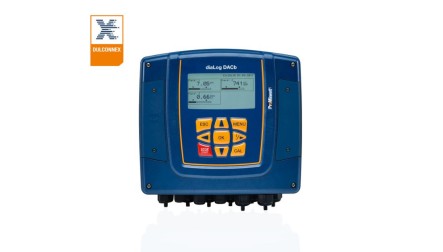
Chrome Reduction / Cyanide Destruction Control System — Metal Plating & Photographic Process Solutions
30+ years spec experience. Send James the process data and get a real answer — not a catalog page.
Request a Spec Review →Named chemicals
LibertyCES has documented Chrome Reduction / Cyanide Destruction Control System in Metal Plating & Photographic Process Solutions service, including hexavalent chromium, trivalent chromium and sulfur dioxide. Wetted materials to confirm: Not a material cell. Compatibility depends on exact concentration, temperature and duty cycle, so confirm with a free spec review.
Materials documented for this service
- Not a material cell — process-control chemistry; wetted materials come from the electrode and valve cells above
Products cited for this service
Real Specifications
| Spec | Value | Source document |
|---|---|---|
| Chrome reduction optimum pH | 2.0-2.5 | GF Piping Systems — Application Solutions Made Easy: Chemical Process Industry |
| Chrome reduction ORP setpoint | -300mV (-400mV max) | GF Piping Systems — Application Solutions Made Easy: Chemical Process Industry |
| Chrome reduction minimum detention time | 15 minutes | GF Piping Systems — Application Solutions Made Easy: Chemical Process Industry |
| Cyanide destruction stage 1 setpoints | pH 11.5, ORP +450mV | GF Piping Systems — Application Solutions Made Easy: Chemical Process Industry |
| Cyanide destruction stage 1 oxidation target | Below 0.1 ppm | GF Piping Systems — Application Solutions Made Easy: Chemical Process Industry |
| Cyanide destruction stage 2 detention time | Up to 4 hours (modern systems) | GF Piping Systems — Application Solutions Made Easy: Chemical Process Industry |
Two explicit, named gas-release hazards govern this control system: dropping batch-process pH below 11 risks improper cyanide-to-cyanate oxidation (acid injection must be manually locked out to prevent it), and in the two-step process, stage-1 pH must be adjusted rapidly or it risks releasing extremely toxic cyanogen chloride gas — both are vendor-stated safety hazards, not tuning suggestions.
Every material and product claim on this page traces to real, vendor-published documentation on file with LibertyCES. Chemical compatibility depends on exact concentration, temperature, and duty cycle — confirm current specifications with the manufacturer and request a spec review before final specification.
FAQ
Can Chrome Reduction / Cyanide Destruction Control System handle Metal Plating & Photographic Process Solutions?
LibertyCES has documented Chrome Reduction / Cyanide Destruction Control System in Metal Plating & Photographic Process Solutions service.
What wetted materials should Chrome Reduction / Cyanide Destruction Control System use in Metal Plating & Photographic Process Solutions service?
Materials documented for this service: Not a material cell — process-control chemistry; wetted materials come from the electrode and valve cells above. Compatibility depends on exact concentration, temperature and duty cycle, so confirm with a spec review before final specification.
Which Metal Plating & Photographic Process Solutions chemicals does this cover?
Named chemicals in this documentation: hexavalent chromium (Cr6+), trivalent chromium (Cr3+), sulfur dioxide, sodium sulfite, sodium metabisulfite, cyanide, cyanate, cyanogen chloride (hazard product), sodium hydroxide, sulfuric acid, chlorine.
Which Chrome Reduction / Cyanide Destruction Control System models are documented for Metal Plating & Photographic Process Solutions?
Documented examples include GF Signet 8900 / 9900 / 9900-1BC / 9950 multi-parameter instruments as the control head, GF Signet 2764-2767 harsh-chemical pH/ORP electrodes for the cyanide/cyanate stream, GF Signet 2250 and 2450 for tank level and pressure, GF Signet 515 / 2536 / 2540 / 2551 / 2552 / 525 flow sensors, GF Signet 2818-2823 and 2839-2842 conductivity electrodes, Georg Fischer actuated valves and 127 / 180-182 / 546 ball valves.
Ready to buy or need a fast answer? Call, text, or email James directly — (559) 395-5500 · [email protected].
Send James your spec
Fluid, concentration, temperature, flow or volume, and where it goes. James replies with a real answer, not a catalog page.
Reviewed by James Riggins, 30+ years specifying water and chemical process equipment · Updated