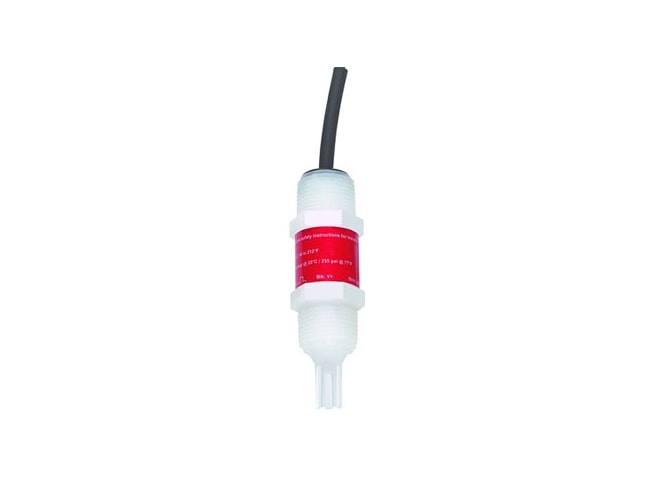
Temperature Sensor — Metal Plating & Photographic Process Solutions
30+ years spec experience. Send James the process data and get a real answer — not a catalog page.
Request a Spec Review →Named chemicals
LibertyCES has documented Temperature Sensor in Metal Plating & Photographic Process Solutions service, including plating bath solutions, chromic acid and nickel sulfate. Wetted materials to confirm: PVDF one-piece body and Pt1000 platinum RTD element. Documented models include GF Signet 2350 Temperature Sensor. Compatibility depends on exact concentration, temperature and duty cycle, so confirm with a free spec review.
Materials documented for this service
- PVDF one-piece body (replaces a metal thermowell entirely)
- Pt1000 platinum RTD element
- In-line mounting 100°C @ 7.5 bar / 108 psi; submersible mounting 85°C @ 7.5 bar — a real lower ceiling for submersible use
Products cited for this service
Real Specifications
| Spec | Value | Source document |
|---|---|---|
| GF Signet 2350 temperature range | 0-100°C (32-212°F), factory calibrated for 4-20mA | GF Signet — Instrumentation Product Range Brochure |
| GF Signet 2350 accuracy/resolution | ±0.5°C accuracy, 0.01°C resolution (digital S3L) | GF Signet — Instrumentation Product Range Brochure |
| GF Signet 2350 in-line max rating | 100°C @ 7.5 bar (108 psi) | GF Signet — Instrumentation Product Range Brochure |
| GF Signet 2350 submersible max rating | 85°C @ 7.5 bar — lower ceiling than in-line mount | GF Signet — Instrumentation Product Range Brochure |
| GF Signet 2350 response time | 10 seconds | GF Signet — Instrumentation Product Range Brochure |
| GF Signet 2350 process connection | 3/4in NPT male thread, both ends | GF Signet — Instrumentation Product Range Brochure |
Signet rates the same 2350 sensor differently by mounting style — 100°C @ 7.5 bar in-line versus 85°C @ 7.5 bar submersible — a real, easy-to-miss ceiling drop if a plating bath runs close to the in-line rating and the sensor is later moved to a submersible mount.
Chromic acid attacks metal thermowells, which is why a PVDF-bodied RTD sensor gets specified on a plating bath instead of a stainless thermowell in the first place — GF Signet's own material justification is that the PVDF body 'outlasts metal sensors in aggressive liquids and eliminates the need for costly custom thermowells,' exactly the failure a metal thermowell risks in that service.
Every material and product claim on this page traces to real, vendor-published documentation on file with LibertyCES. Chemical compatibility depends on exact concentration, temperature, and duty cycle — confirm current specifications with the manufacturer and request a spec review before final specification.
FAQ
Can Temperature Sensor handle Metal Plating & Photographic Process Solutions?
LibertyCES has documented Temperature Sensor in Metal Plating & Photographic Process Solutions service.
What wetted materials should Temperature Sensor use in Metal Plating & Photographic Process Solutions service?
Materials documented for this service: PVDF one-piece body (replaces a metal thermowell entirely), Pt1000 platinum RTD element, In-line mounting 100°C @ 7.5 bar / 108 psi; submersible mounting 85°C @ 7.5 bar — a real lower ceiling for submersible use. Compatibility depends on exact concentration, temperature and duty cycle, so confirm with a spec review before final specification.
Which Metal Plating & Photographic Process Solutions chemicals does this cover?
Named chemicals in this documentation: plating bath solutions, chromic acid, nickel sulfate, effluent from plating rinse.
Which Temperature Sensor models are documented for Metal Plating & Photographic Process Solutions?
Documented examples include GF Signet 2350 Temperature Sensor (one-piece injection molded PVDF body, Pt1000 platinum RTD in an extended tip, factory calibrated 0-100°C / 32-212°F for 4-20mA, digital S3L accuracy ±0.5°C with 0.01°C resolution and 10-second response, 3/4in NPT male both ends).
Ready to buy or need a fast answer? Call, text, or email James directly — (559) 395-5500 · [email protected].
Send James your spec
Fluid, concentration, temperature, flow or volume, and where it goes. James replies with a real answer, not a catalog page.
Reviewed by James Riggins, 30+ years specifying water and chemical process equipment · Updated