
Industrial & Commercial Sand Filtration Systems (FRP & Steel)
Your pumps are dying from entropy. We stop it — by removing abrasive solids before they destroy seals, impellers, and heat exchangers.
We do not sell residential pool filters. LibertyCES engineers filtration skids for cooling towers, manufacturing plants, and municipal water treatment where downtime isn’t an option.

Stop Changing Filter Bags: Separation vs. Filtration
There’s a difference between trapping dirt (which clogs) and spinning dirt (which self-cleans). When you pull abrasives out early with a centrifugal separator, you extend downstream filter life and reduce plugging across the system.
Centrifugal Separation
Removes sand/silt without loading media or bags first — ideal as a front-line solids “knockout.”
High-Rate Filtration
Polishes water after separation to protect nozzles, heat exchangers, seals, and membranes.
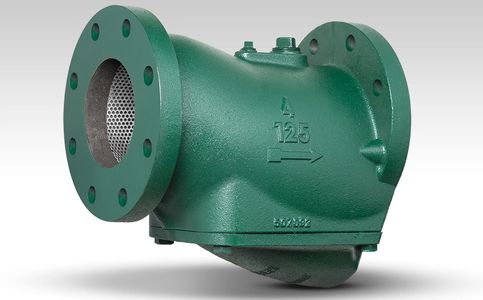
The “Cavitation Killer”: Suction Stabilization & Pump Life
Turbulence at the pump suction creates vapor bubbles that collapse on the impeller — cavitation. Over time, it chews up metal, increases vibration, and turns pumps into maintenance projects.
Flow Conditioning
A suction diffuser can straighten turbulent flow so pumps see stable inlet conditions — even when straight-run space is limited.
Lower Pressure Drop
Low pressure drop strainers reduce energy waste vs. restrictive Y-strainers and help protect hydraulic performance.
Engineered for High-Fouling Environments
Where this wins isn’t “clean water.” It’s the ugly stuff — solids, grit, sludge, and cycling conditions that destroy equipment quietly.
Cooling Tower Basin Sweeping
Continuously removes solids so you don’t build sludge that fouls heat exchange and plugs nozzles.
Industrial Process Water
Protects spray nozzles and pumps in manufacturing where abrasive fines destroy seals and create downtime.
Municipal / Reuse / Flush Water
Recycle water instead of dumping it — remove solids so reuse doesn’t become an equipment liability.
Complete Skid Integration
Separator + filter + valves + controls coordination so the system runs predictably under real solids loading.
Free & Easy Spec Review — Tell Us What’s Killing Your Pumps
Simple. Call us or paste your situation. We’ll recommend the right separator/filter pathway, sizing, materials (FRP vs steel), and automation direction.
Copy / Paste Brief
Paste this into the contact page. Rough estimates are fine.
FAQ — Industrial Intent
What is the difference between a commercial sand filter and a pool filter?
Commercial sand filtration systems use FRP or steel vessels designed for higher flow rates and harsher operating environments. Pool filters are low-pressure residential units built for different duty cycles and water conditions.
How does a centrifugal sand separator work in cooling towers?
A centrifugal separator uses rotational flow to force heavier solids (sand/silt) out of the water before they reach the basin and downstream equipment, reducing sludge buildup and heat exchanger fouling.
Can a suction diffuser prevent pump cavitation?
It can significantly reduce cavitation risk by conditioning turbulent flow into a smoother stream at the pump inlet, helping stabilize suction hydraulics and extending pump component life.
What is an LPD strainer and why use it?
An LPD (low pressure drop) strainer uses a more efficient flow path and larger effective screen area than typical Y-strainers, reducing restriction and helping avoid unnecessary energy waste.
How often do industrial sand filters need backwashing?
Frequency depends on solids loading and operating hours. Many industrial systems can be configured for automated purge/backwash sequencing to reduce manual intervention.
What is “basin sweeping” in a cooling tower?
Basin sweeping uses a side-stream filtration skid and nozzle strategy to keep solids in motion and remove them continuously, reducing sludge accumulation without draining the tower.
Why use FRP filters instead of steel for industrial water?
FRP resists rust and corrosion, making it a strong choice for harsh water chemistry and environments where steel would degrade faster without protective coatings and maintenance.
Does LibertyCES fabricate custom filtration skids?
Yes. LibertyCES can engineer complete drop-in skids integrating separators, filters, valves, and controls pathways for industrial duty applications.
Explore Related Systems
Complete the hub: effluent dispersal, chemical dosing, and membrane protection pathways.

Meet the Engineer: James Riggins
James Riggins brings 30+ years of expertise in fluid dynamics and filtration engineering. Known for a “zero spec failure” mindset, he designs systems that combat entropy and extend the life of critical industrial assets like pumps, nozzles, and heat exchangers.