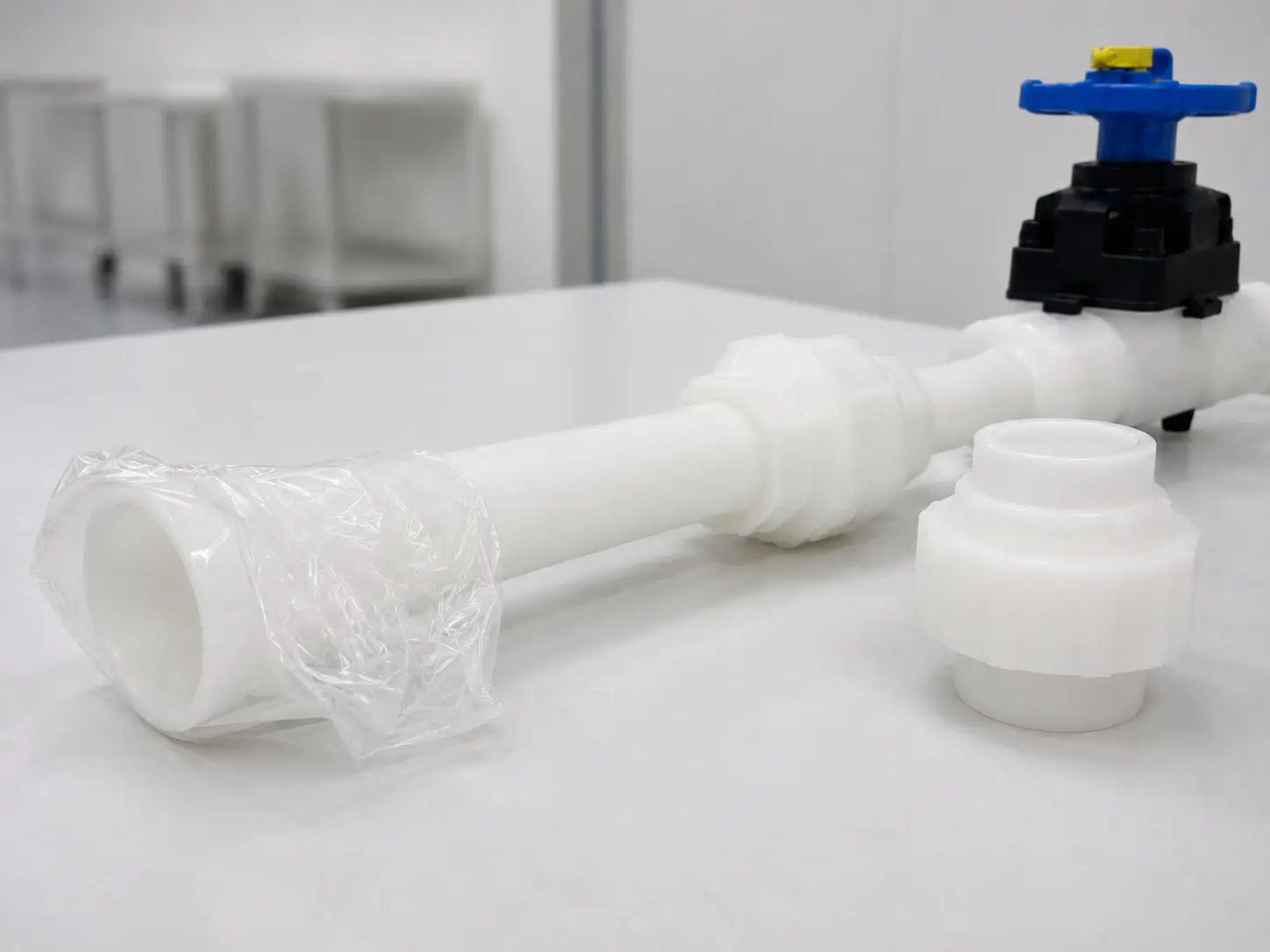
UPW Valve Misapplied to Hot Acid Service
"High purity" is a statement about UPW qualification, not a universal chemical-compatibility guarantee for a different, more aggressive service.
A component’s high-purity designation was treated as a substitute for an application-specific chemical, temperature and pressure review. A valve can be an excellent high-purity component and still be wrong for a particular concentration, temperature, pressure, sealing material or service condition. The fix is a full duty-condition specification that checks the complete valve assembly.
At a glance
| Equipment | UPW (high-purity) valve in hot acid service |
|---|---|
| Fluid / service | Concentrated hot sulfuric acid |
| Material involved | PVDF suitability for hot sulfuric acid depends on actual concentration and temperature |
| Failure mode | High-purity valve can still be wrong for a particular concentration, temperature, pressure, sealing material or service condition |
| Cause | High-purity designation treated as a substitute for an application-specific chemical, temperature and pressure review |
| Corrective action | Full duty-condition specification that checks the complete valve assembly |
| Verify before ordering | Acid concentration, operating and maximum upset temperature, pressure, line size, duty/cycling, connection type, cleanliness, seals |
Two Separate Ratings, Read as One
A valve engineered and certified for ultra-pure water service — clean-room manufactured, ISO-certified, high-purity resin — carries a real, meaningful qualification for that specific service. It's easy to read "high purity" as "maximally resistant to everything," but purity and chemical compatibility are answering different questions. A resin can be excellent for UPW and simultaneously have a defined, limited compatibility window for an aggressive chemical like concentrated hot sulfuric acid — a window that depends on the actual concentration and temperature, not the purity rating.
Specify the Complete Duty Condition, Not Just the Chemical Name
| Establish | Why |
|---|---|
| Exact acid concentration | Material compatibility for a given resin changes with concentration. |
| Operating temperature and maximum upset temperature | Not just design-basis temperature — the real upset case too. |
| Pressure | Full operating and upset-condition pressure. |
| Line size, duty/cycling, connection type | The mechanical service context, not just the chemistry. |
| Cleanliness requirement | Whether the service actually requires UHP cleanliness or just chemical resistance. |
| Seal/diaphragm requirements | The complete wetted assembly, not just the valve body resin. |
For particularly aggressive high-purity chemical service, a PFA/PTFE-wetted product line is a common candidate — but even that isn't a blanket rule; material selection follows the manufacturer's own concentration-specific guidance, not the chemical name alone.
Frequently Asked Questions
Does a "high purity" or "UPW-rated" designation mean a valve resists any aggressive chemical?
No — this is one of the most important specification corrections in this whole failure library. A component's "high purity" designation is a statement about its qualification for ultra-pure water service, not a substitute for an application-specific chemical, temperature, and pressure compatibility review for a different, more aggressive service.
Does PVDF fail in hot sulfuric acid?
Not as a universal statement. PVDF can have excellent resistance to many acids, and manufacturers explicitly market chemical-grade PVDF for sulfuric-acid applications within specified concentration and temperature ranges. Whether a specific PVDF valve is appropriate for a specific hot sulfuric acid service depends on the actual concentration and temperature — not the material name alone.
What should be specified for an aggressive hot-chemical valve application?
Gather the exact acid concentration, operating temperature, maximum upset temperature, pressure, line size, duty/cycling, connection type, cleanliness requirement, and seal/diaphragm requirements, then check the complete valve assembly — not merely the body resin. For particularly aggressive high-purity chemical service, a PFA/PTFE-wetted product line is a common candidate, but material selection should follow the manufacturer's own concentration-specific guidance rather than a blanket rule.
Specifying a valve for aggressive hot chemical service?
Send LibertyCES the real concentration, temperature, and upset conditions — we'll help confirm the material before it's ordered, not after it fails.
Ready to buy or need a fast answer? Call, text, or email James directly — (559) 395-5500 · [email protected].
Send James your spec
Fluid, concentration, temperature, flow or volume, and where it goes. James replies with a real answer, not a catalog page.
Reviewed by James Riggins, 30+ years specifying water and chemical process equipment · Updated