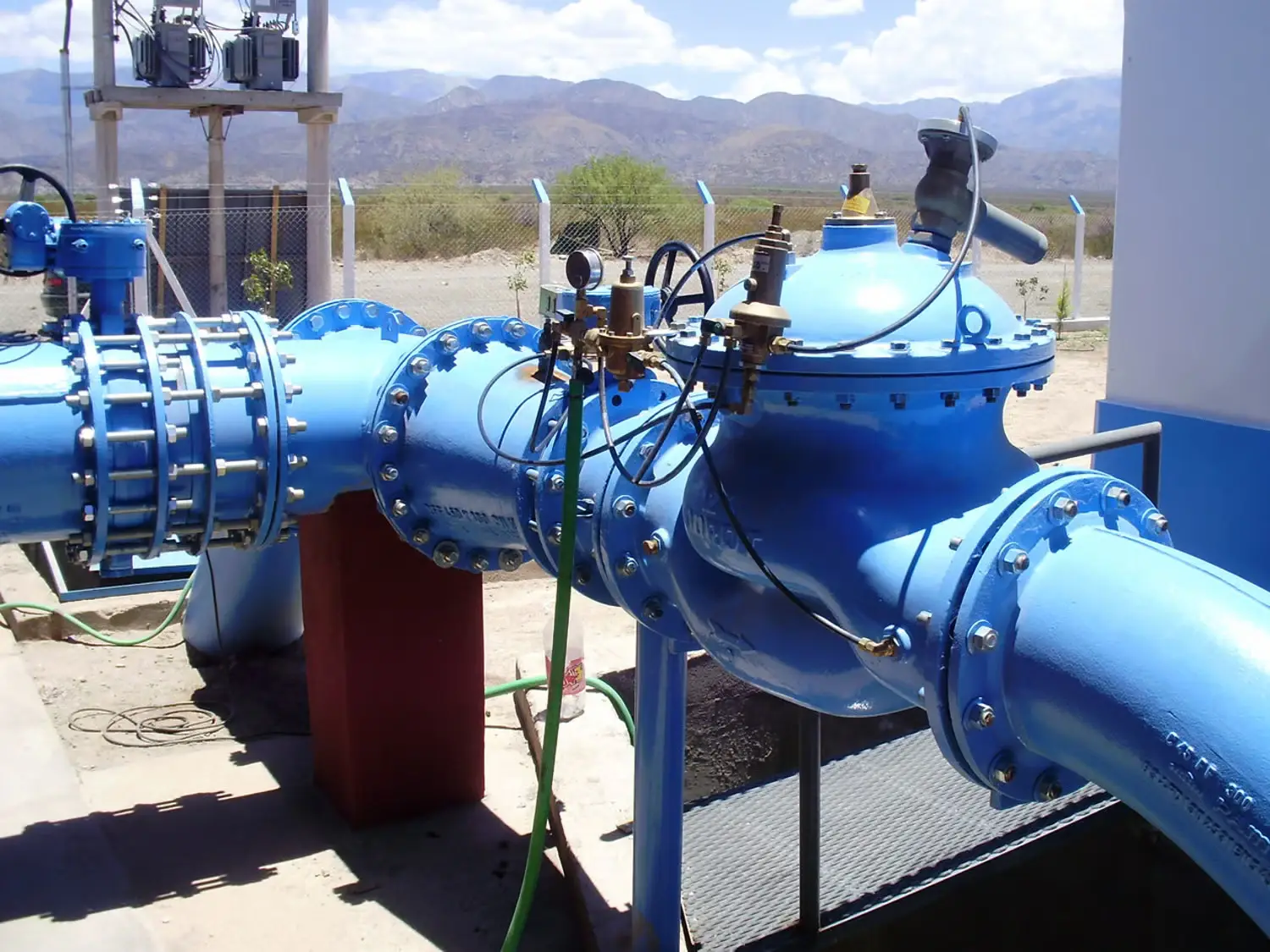
Pilot-Operated Control Valve for Mining / Heap Leaching
30+ years spec experience. Send James the process data and get a real answer — not a catalog page.
Request a Spec Review →Yes. LibertyCES has documented Pilot-Operated Control Valve in Mining / Heap Leaching applications, including Netafim 90 Series, Netafim 100 Series and Netafim Flushing Valve with Timer. The right model depends on the fluid, concentration, temperature, flow and duty cycle, so send James your process data for a free spec review before final selection.
Products cited in this application
Real Specifications
| Spec | Value | Source document |
|---|---|---|
| 75 Series pressure & temperature | 3/4"-4"R: 10 bar/145 psi; 3"H-8"R: 12 bar/175 psi; both 60°C/140°F max | Netafim Mining — Heap Leaching Products Catalog |
| 90 Series pressure & temperature | 8-10 bar/115-145 psi (size-dependent), 40°C/104°F max | Netafim Mining — Heap Leaching Products Catalog |
| 100 Series pressure | 16 bar/230 psi or 25 bar/365 psi, metal body (cast iron/ductile iron/bronze/stainless) | Netafim Mining — Heap Leaching Products Catalog |
| ALD70 diaphragm sulfuric acid rating | 38°C max — far more restrictive than the body/liner materials at the same acid concentration | Netafim Mining — Heap Leaching Products Catalog |
On a sulfuric heap-leach quote, the ALD70 diaphragm — not the body or liner material — is the limiting component at only 38°C max; ALD70 is also rated Not Good for nitric acid even at 10%, chlorine dioxide, and chlorine gas, with Hastelloy named by Netafim's own catalog as the substitute for those three chemistries specifically.
Most suppliers would spec this valve off the body material and call it done. The diaphragm elastomer is the part that actually fails first on a sulfuric leach circuit — Netafim's own chart puts ALD70's ceiling at 38°C, which is the number that decides whether this valve survives the application, not the pressure rating on the nameplate.
Every claim on this page traces to real, vendor-published documentation on file with LibertyCES. Confirm current specifications with the manufacturer before final specification.
Related Guides
FAQ
How is Pilot-Operated Control Valve used in Mining / Heap Leaching?
LibertyCES has documented Pilot-Operated Control Valve specified in Mining / Heap Leaching applications.
Which Pilot-Operated Control Valve models are specified for Mining / Heap Leaching?
Documented models include Netafim 75 Series diaphragm-actuated hydraulic/electric control valve, Netafim 90 Series, Netafim 100 Series, Netafim Flushing Valve with Timer. Confirm current specifications with the manufacturer before final selection.
What does LibertyCES need to size Pilot-Operated Control Valve for a Mining / Heap Leaching application?
The fluid and its concentration, operating temperature, flow or volume, pressure and suction conditions, duty cycle, and the existing equipment it replaces or connects to. James reviews it for free.
Ready to buy or need a fast answer? Call, text, or email James directly — (559) 395-5500 · [email protected].
Send James your spec
Fluid, concentration, temperature, flow or volume, and where it goes. James replies with a real answer, not a catalog page.
Reviewed by James Riggins, 30+ years specifying water and chemical process equipment · Updated