From Shutdowns to Sleepless Nights — to 365 Days of Flow
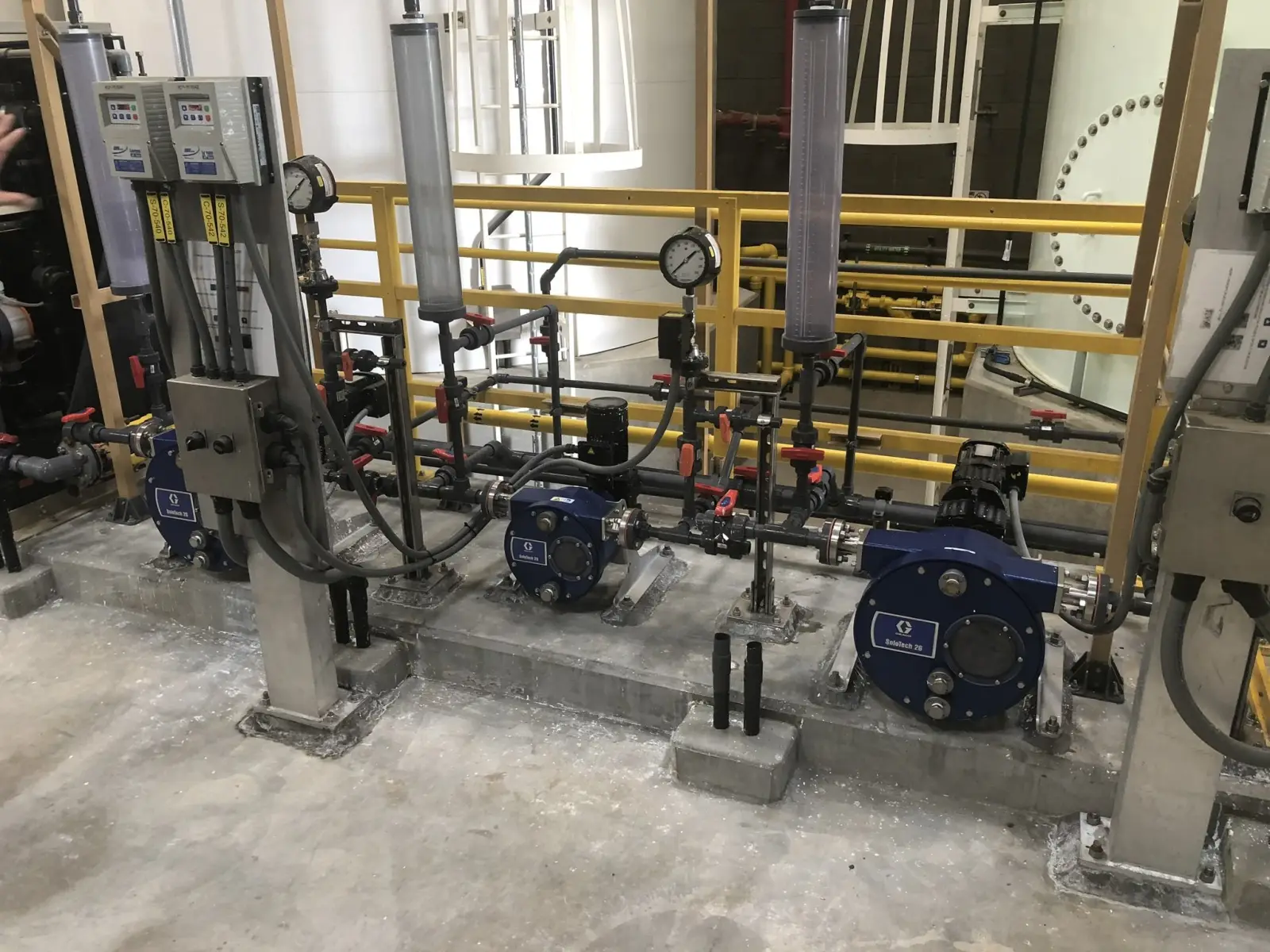
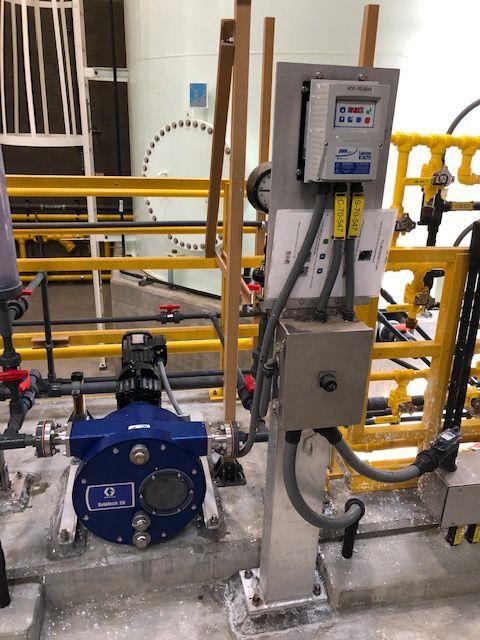
How Liberty Chemical Equipment & Supply helped a California municipal water treatment facility solve recurring calcium hydroxide slurry pump failures with a Graco SoloTech™ peristaltic hose pump. James Riggins specified the pump around the chemistry, the duty cycle, and the failure mode — not just the flow rate.
A California municipal water treatment facility used calcium hydroxide slurry for pH control, and it hardened in the pump, hose and valves whenever flow stopped, causing about 10 clog shutdowns a year. A Graco SoloTech peristaltic hose pump with reversible operation cut those to zero, with documented hose life of 12+ months.
At a glance
| Process / fluid | Calcium hydroxide, Ca(OH)₂, slurry |
|---|---|
| Application | pH control |
| Equipment | Graco SoloTech peristaltic hose pump |
| Problem | Slurry hardened in pump, hose and valves when flow stopped, causing about 10 clog shutdowns a year |
| Solution | Peristaltic hose pump with reversible operation and a simplified fluid path |
| Outcome | Clog shutdowns cut to zero; documented hose life of 12+ months |
What Changed After the Graco SoloTech Pump Was Specified
Recurring shutdowns tied to hardened calcium hydroxide slurry were eliminated in this documented operating window.
Reversible operation and a simplified fluid path reduced the need for emergency line openings and manual clearing.
Based on 10 avoided incidents, 3–5 hours per event, and two technicians per response.
Conservative estimate based on $1,000/hour across 30–50 hours of avoided annual downtime.
"For a crystallizing slurry like calcium hydroxide, the winning design decision was not 'more force.' It was fewer places for the chemical to sit, dry, crystallize, and turn into a maintenance event." — James Riggins
Featured Product in This Upgrade
When Flow Stopped, Concrete Happened
A municipal facility used calcium hydroxide, Ca(OH)₂, for pH control. Its operating problem was simple and brutal: when the slurry stopped moving, it hardened like concrete inside the pump, hose, and valves. This caused repeated clog-related shutdowns, emergency cleaning, hose replacement, and maintenance overtime. Every outage created a static window — every static window gave the calcium hydroxide time to settle, crystallize, and lock the fluid path.
SoloTech Calcium Hydroxide FAQ
Why does calcium hydroxide slurry clog pumps?
When flow stops, calcium hydroxide (Ca(OH)₂) slurry can harden inside the pump, hose, and valves — every static window gives the slurry time to settle, crystallize, and lock the fluid path.
Why does a peristaltic hose pump solve this better than the previous pump type?
Reversible operation and a simplified fluid path reduce the need for emergency line openings and manual clearing, directly addressing the hardening failure mode rather than just moving more flow.
How long does the hose last in this application?
Approximately 12+ months of hose life was documented in this calcium hydroxide slurry application.
Fighting a slurry that hardens between doses?
Send LibertyCES the chemistry, duty cycle, and current pump setup — James specifies around the failure mode, not just the flow rate.
Send James your spec
Fluid, concentration, temperature, flow or volume, and where it goes. James replies with a real answer, not a catalog page.
Reviewed by James Riggins, 30+ years specifying water and chemical process equipment · Updated