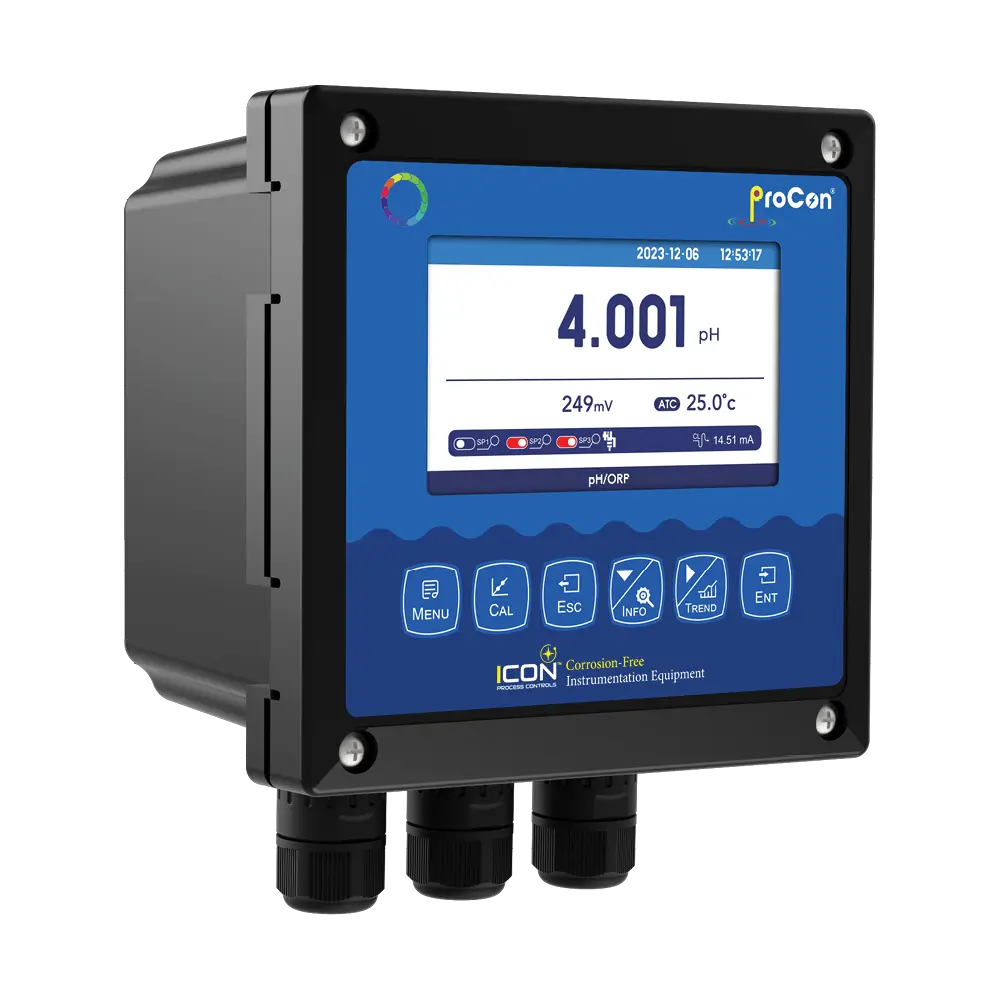
Controller for Plating
30+ years spec experience. Send James the process data and get a real answer — not a catalog page.
Request a Spec Review →Yes. LibertyCES has documented Controller in Plating applications. The right model depends on the fluid, concentration, temperature, flow and duty cycle, so send James your process data for a free spec review before final selection.
Notes from the vendor documentation
Detailed chrome-reduction and cyanide-destruction control setpoints explicitly documented.
Products cited in this application
Real Specifications
| Spec | Value | Source document |
|---|---|---|
| Chrome reduction pH control range | 2.0-2.5 optimum — reaction rate slows significantly by pH 3.0, very slow by pH 4.0 | GF Piping Systems — Application Solutions Made Easy: Chemical Process Industry |
| Chrome reduction detention time | Minimum 15 minutes | GF Piping Systems — Application Solutions Made Easy: Chemical Process Industry |
| Chrome reduction ORP setpoint | -300mV (-400mV max) at pH 2.0 | GF Piping Systems — Application Solutions Made Easy: Chemical Process Industry |
| Cyanide destruction batch, Stage 1 | pH 11.5 via sodium hydroxide, chlorine to ORP +450mV; monitoring target 9.5 pH / 450mV post-neutralization | GF Piping Systems — Application Solutions Made Easy: Chemical Process Industry |
| Cyanide destruction two-step | Stage 1 target oxidation below 0.1 ppm; Stage 2 pH lowered with sulfuric acid, up to 4-hour detention time | GF Piping Systems — Application Solutions Made Easy: Chemical Process Industry |
Two explicit, named gas hazards are built into these setpoints: dropping chrome-reduction pH further than needed risks releasing hazardous sulfur dioxide gas, and letting cyanide-destruction pH drop below 11 during the batch process risks releasing toxic cyanogen chloride gas — both explicitly named by the vendor as controller-relevant safety limits, not general handling cautions.
A plating batch controller running chrome reduction or cyanide destruction isn't just holding a setpoint — it's the only thing standing between normal operation and a named toxic-gas release. GF Signet's own process documentation ties the pH 2.0-2.5 chrome-reduction range and the pH-11.5-with-a-hard-floor-at-11 cyanide-destruction sequence directly to SO2 and cyanogen chloride gas hazards.
Every claim on this page traces to real, vendor-published documentation on file with LibertyCES. Confirm current specifications with the manufacturer before final specification.
FAQ
How is Controller used in Plating?
Detailed chrome-reduction and cyanide-destruction control setpoints explicitly documented.
Which Controller models are specified for Plating?
Documented models include Chrome reduction/cyanide destruction batch controller. Confirm current specifications with the manufacturer before final selection.
What does LibertyCES need to size Controller for a Plating application?
The fluid and its concentration, operating temperature, flow or volume, pressure and suction conditions, duty cycle, and the existing equipment it replaces or connects to. James reviews it for free.
Ready to buy or need a fast answer? Call, text, or email James directly — (559) 395-5500 · [email protected].
Send James your spec
Fluid, concentration, temperature, flow or volume, and where it goes. James replies with a real answer, not a catalog page.
Reviewed by James Riggins, 30+ years specifying water and chemical process equipment · Updated