
Direct Lithium Extraction Piping & Valve Infrastructure
DLE performance depends on more than the lithium-separation media. Raw brine, wash and elution chemicals, regeneration streams, concentrated lithium solution, and reinjection lines each create different material, pressure, temperature, solids, containment, and control requirements.
What Must Be Specified Before Choosing DLE Piping and Valves?
Start with the actual fluid stream, not a general label such as “lithium brine.” The correct piping and valve specification depends on complete ion chemistry, pH, chloride and sulfate levels, dissolved and suspended solids, oxidizers or organics, minimum and maximum temperature, design pressure, vacuum exposure, flow velocity, cleaning chemistry, duty cycle, location, joining method, containment requirement, and control philosophy.
No single polymer or alloy is automatically correct for every DLE line. Thermoplastics can eliminate metal-corrosion mechanisms in many aggressive services, but they still require chemical-resistance verification, pressure-temperature derating, thermal-expansion design, support spacing, permeation review, joining procedures, and code evaluation.
Map Each Process Stream
Raw geothermal brine, pre-treatment waste, wash acid, regeneration chemical, lithium-rich eluate, rinse water, concentrate, and spent-brine reinjection are different services.
Verify the Complete Wetted Path
Pipe, fittings, valve body, seat, O-ring, diaphragm, gasket, instrument connection, expansion joint, and containment system must be checked together.
Design for Pressure and Temperature
Use maximum upset conditions, not only normal operation. Include thermal cycling, surge, vacuum, static head, pump shutoff, blocked discharge, and cleaning conditions.
Define the Safe State
Every automated valve needs a documented on/off or modulating duty, torque basis, feedback requirement, enclosure rating, and fail-open, fail-closed, or fail-in-place decision.
The Direct Lithium Extraction Fluid Path
DLE technologies vary, but the surrounding infrastructure usually moves several chemically different streams through extraction, regeneration, concentration, and reinjection. Treating the plant as one generic “brine loop” hides the material and containment decisions that actually control reliability.
Production Brine
Hot or warm brine arrives with a site-specific mix of chlorides, sulfates, silica, dissolved gases, hardness, trace metals, and suspended solids. Piping must be checked for corrosion, scaling, erosion, temperature, and pressure.
Pre-Treatment
Filtration, pH adjustment, softening, solids removal, or gas management may be required before the extraction media. These steps create their own waste, cleaning, and backwash streams.
Extraction Module
Adsorption, ion exchange, membranes, solvents, or other licensed DLE methods impose different pressure drops, cycle sequences, valve counts, and contamination limits.
Wash and Regeneration
Acids, bases, water, or proprietary regenerants strip lithium from the extraction media. The chemical concentration and temperature may differ sharply from the incoming brine.
Lithium-Rich Product Stream
Eluate or concentrate moves to purification and product conversion. Purity requirements may make leachables, contamination, dead legs, and joining quality as important as corrosion resistance.
Spent-Brine Reinjection
Reinjection lines can be long, difficult to access, and environmentally consequential. Pressure, temperature, scaling, buried routing, secondary containment, and leak detection must be decided from the actual site risk.
Why DLE Infrastructure Is a Multi-Condition Specification
The failure risk does not come from chloride, heat, acid, solids, pressure, or automation by itself. It comes from their interaction across operating, cleaning, startup, shutdown, and upset conditions.
Chloride and Brine Chemistry
Metallic materials must be evaluated for localized corrosion mechanisms such as pitting, crevice corrosion, and stress-corrosion cracking. Thermoplastics avoid rusting, but their exact resin, temperature, pressure, permeation behavior, and chemical exposure still require verification.
Temperature and Thermal Cycling
Temperature changes chemical resistance, pressure rating, modulus, expansion, support spacing, valve torque, gasket behavior, and instrument accuracy. Use the maximum credible fluid and ambient temperatures, including cleaning and shutdown conditions.
Solids, Scale, and Abrasion
Silica, sand, precipitates, and scale can erode components, obstruct valve seats, increase pressure drop, and interfere with leak-detection or instrument connections. Velocity and cleaning strategy matter as much as material name.
Acids, Bases, and Regenerants
Wash and regeneration chemistry can be more aggressive than the raw brine. Specify each recipe, concentration, temperature, exposure duration, rinse sequence, and accidental cross-contamination case.
Pressure, Vacuum, and Surge
Pump shutoff, blocked discharge, water hammer, column cycling, elevation, thermal expansion, and draining can produce conditions outside normal operation. Carrier pipe, containment pipe, valves, actuators, supports, and relief strategy must share one design basis.
Remote Operation and Fail State
Remote geothermal sites may favor electric actuation where compressed-air infrastructure is impractical. The actuator still needs correct torque, cycle life, feedback, environmental rating, local override, and a defined safe response to loss of power or signal.
Thermoplastic Piping for Direct Lithium Extraction
PVDF piping, polypropylene, ECTFE, and advanced polyethylene may be strong candidates for selected DLE streams because they do not rely on passive metal films for corrosion resistance. That does not make them interchangeable. Each material has a different chemical envelope, temperature capability, pressure derating curve, stiffness, joining method, permeation behavior, and installation requirement.
| DLE Service Zone | Primary Design Risk | Candidate Material Families | Required Verification |
|---|---|---|---|
| Raw geothermal brine | Chlorides, temperature, gases, silica, solids, scaling | Advanced PE, PP, PVDF, ECTFE, or qualified alloys | Full ion analysis, temperature, pressure, velocity, solids, scaling and cleaning plan |
| Acid wash / elution | Acid concentration, heat, permeation, thermal cycling | PVDF, ECTFE, advanced PE, PP, or lined systems | Exact acid, concentration, temperature, duration, pressure, rinse and upset chemistry |
| Caustic regeneration | Concentration, temperature, stress, seal compatibility | PP, advanced PE, PVDF, ECTFE, or qualified alloys | Concentration-temperature matrix and every valve-seat, O-ring, gasket and instrument material |
| Lithium-rich eluate | Purity, contamination, dead legs, leachables | PVDF, PP, high-purity thermoplastics, or qualified alloys | Product-purity target, cleaning method, joint quality and allowable extractables |
| Spent brine / reinjection | Long routing, pressure, scaling, buried access, release consequence | Advanced PE, PP, PVDF, ECTFE, qualified alloys, single or double wall | Routing, burial, pressure class, leak detection, environmental review and repair strategy |
This matrix is an initial screening tool, not an approval. Final material selection must use current manufacturer chemical-resistance and pressure-temperature data for the actual resin grade and component geometry.
Do not approve a system by pipe material alone. The weak point may be the valve seat, O-ring, gasket, sight glass, instrument diaphragm, expansion joint, fusion procedure, support design, or transition to metal equipment.
Thermoplastic Versus Metal: The Honest Comparison
| Decision Factor | Thermoplastic Systems | Metal / Alloy Systems | Engineering Implication |
|---|---|---|---|
| Corrosion mechanism | Do not rust; chemical absorption, permeation, swelling, environmental stress cracking, or degradation remain possible | Can be vulnerable to pitting, crevice corrosion, galvanic effects, erosion-corrosion, and stress-corrosion cracking | Compare the actual chemistry and stress state, not generic “corrosion resistance” claims |
| Temperature and pressure | Ratings generally derate as temperature rises; creep and expansion require design attention | Often higher mechanical strength and temperature capability, but corrosion can limit usable envelope | Use the full pressure-temperature curve and upset conditions |
| Heat transfer | Lower thermal conductivity may reduce heat loss but can also change heat tracing and thermal-gradient behavior | Higher conductivity may require insulation and can transfer process heat rapidly | Evaluate process heat balance and freeze/overheat protection |
| Joining and inspection | Fusion quality depends on trained personnel, clean preparation, correct equipment, and documented parameters | Welding requires qualified procedures, materials, inspection, and corrosion control | Installation quality can defeat a correct material choice |
| Fire, UV, support and code | May require specific fire, UV, support, seismic, and code provisions | Often better high-temperature structural performance, but coatings and corrosion allowance may be required | Material selection must include the installation environment and jurisdiction |
Three System Families to Evaluate Around the DLE Process
The correct combination depends on the stream. LibertyCES uses the DLE process map to decide where single-wall industrial piping, double containment, leak detection, thermoplastic valves, and electric actuation belong.

Duo-Pro® PP, PVDF, and ECTFE
Duo-Pro is an engineered pipe-within-a-pipe system for pressurized transfer, drainage, underground, manufacturing, and other high-consequence routes. The carrier and containment materials can be selected separately to match media, pressure, and routing requirements.
- PP, PVDF, and ECTFE material options
- Carrier-pipe ratings available up to 150 psi, subject to size, material, temperature, and design data
- Prefabricated spools and fusion joining options
- Leak-detection cable capability on qualifying sizes

Series 19 Smart Electric Actuation
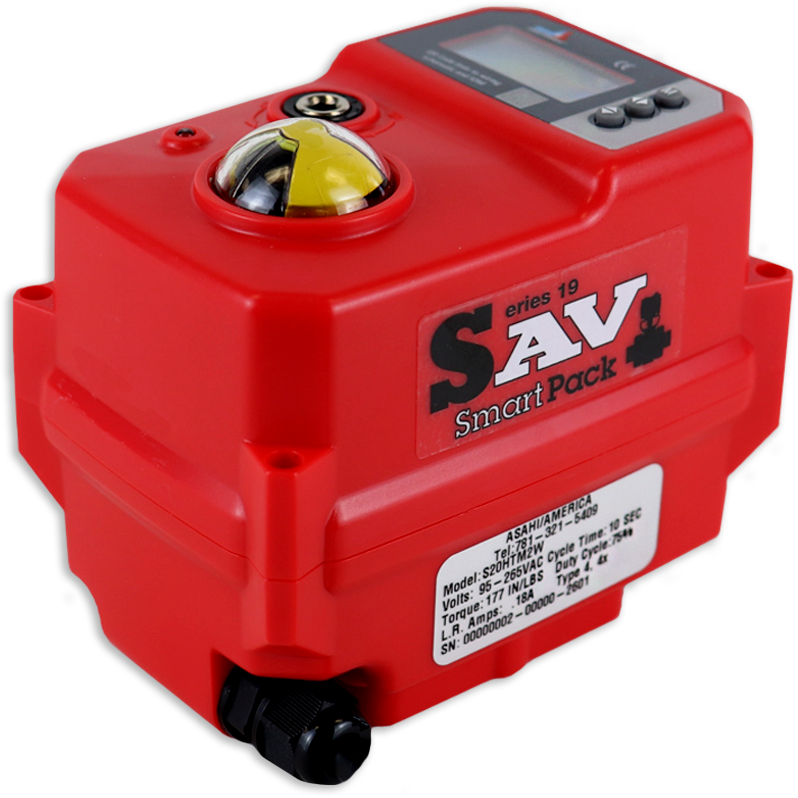
Series 19 actuators support on/off, modulating, failsafe, and modulating-failsafe configurations for compatible Asahi/America ball and butterfly valves. They are a candidate where the DLE sequence requires repeatable valve cycling, remote status, or a defined power-loss response.
- Multi-voltage capability and visual position indication
- LED position or fault indication and auxiliary contacts
- Corrosion-resistant NEMA 4X engineered-resin enclosure
- Factory-mounted and tested valve-actuator packages
Chem Proline® Advanced PE
Chem Proline uses advanced polyethylene resin with fusion joining and resistance to slow crack growth, impact, abrasion, and brittle failure. It can be screened for brine, process chemical, waste, acid, caustic, and industrial-water services after the exact chemistry and design envelope are verified.
- Fusion-welded pipe and fittings
- Manufacturer lists pH 1-14 applications as a broad screening range
- Standard supply range from 1/2 inch through 12 inches, with larger sizes available
- Compatible system accessories available for chemical-feed and process service
Where Double Containment Piping Belongs in a DLE Plant
Double containment is not automatically required on every DLE line, and it should not be selected as a decorative safety feature. It belongs where the consequence of a carrier-pipe leak justifies a secondary barrier and a defined detection-and-response strategy.
Buried or Inaccessible Routes
Use a consequence-based review for lines beneath roads, slabs, process areas, or other locations where a small leak could remain hidden or require major excavation.
Hazardous or Environmentally Sensitive Media
Consider the chemical hazard, volume, pressure, proximity to soil or groundwater, and cleanup difficulty. Applicable federal, state, local, and project requirements must be reviewed.
Occupied or Critical Areas
Routes over electrical rooms, workstations, clean process areas, or critical equipment may justify secondary containment even when burial rules do not apply.
Long Reinjection or Waste Lines
Long runs magnify access, isolation, location, and repair challenges. Segment isolation, interstitial monitoring, low-point design, and alarm logic should be planned before routing is frozen.
Leak Detection Must Be Designed With the Pipe
Pressurized and drainage systems require different detection methods. The design should establish whether the goal is simple leak confirmation, exact leak location, automatic shutdown, local alarm, remote SCADA notification, or all of the above. The annular space, low points, access ports, sensor compatibility, test procedure, and maintenance plan must be included in the piping specification.
Electric Valve Actuator Selection Is a System Decision
An electric valve actuator is one important component within the DLE infrastructure. It must be selected only after the valve, process duty, fail state, torque, cycle requirements, controls, and environment are defined.
Valve Construction
Verify body material, ball or disc, stem, seat, O-ring, diaphragm, fasteners, flange interface, cavity behavior, pressure-temperature rating, and suitability for solids or crystallization.
Operating Function
Define on/off isolation, throttling, sequence control, diversion, bypass, drain, vent, or emergency isolation. A valve that can modulate is not automatically a good control valve for the required range.
Torque and Cycle Basis
Use break, running, and reseating torque with appropriate safety factors. Account for chemical deposits, temperature, seat swelling, line pressure, frequency of operation, and expected service life.
Fail Position
Choose fail-open, fail-closed, or fail-in-place from the process hazard analysis. Loss of power, signal, communications, or local control can require different responses at different valves.
PLC / DCS Integration
Confirm command signal, feedback, auxiliary contacts, fault indication, local/remote operation, interlocks, permissives, alarms, and how the sequence responds to incomplete travel.
Environment
Verify enclosure rating, temperature, UV, washdown, corrosion, hazardous-location classification, condensation, cable entry, access for maintenance, and manual override requirements.
Eight Steps to a Defensible DLE Piping and Valve Specification
Use this sequence before issuing a material recommendation, valve schedule, actuator package, or double-containment specification.
- Map every fluid stream. Identify raw brine, treated brine, wash, elution, regeneration, product, rinse, drain, waste, and reinjection services.
- Document the complete chemistry. Record ions, pH, dissolved gases, TDS, suspended solids, oxidizers, organics, additives, and credible cross-contamination.
- Define the mechanical envelope. Establish minimum, normal, maximum, startup, cleaning, shutdown, and upset temperature, pressure, vacuum, flow, and surge conditions.
- Screen pipe and component materials. Compare thermoplastics, alloys, lined systems, elastomers, gaskets, and instrument materials against current manufacturer data.
- Engineer joints, supports, and transitions. Specify fusion or welding procedures, expansion control, support spacing, anchors, guides, flanges, and metal-to-plastic transitions.
- Set the containment strategy. Decide single versus double wall, interstitial design, leak-detection method, alarm location, automatic shutdown, and repair access.
- Select valves and actuation. Define valve type, trim, torque, cycle life, fail state, command and feedback signals, enclosure, local controls, and interlocks.
- Complete manufacturer and project review. Reconcile the specification with process-licensor requirements, code, jurisdiction, HAZOP or process-safety findings, and final vendor data.
Send the Real Service Conditions
Provide the fluid analysis, concentration range, temperature, pressure, flow, solids, line size, route, containment need, valve duty, actuator fail state, controls, and applicable project standards. LibertyCES can then review the complete DLE fluid path instead of guessing from a chemical name.
Start the Specification ReviewContinue the DLE Infrastructure Review
Direct Lithium Extraction Piping and Valve FAQ
What piping material is best for direct lithium extraction?
There is no universal best material. PVDF, polypropylene, ECTFE, advanced polyethylene, lined systems, and selected alloys can all be appropriate in different parts of a DLE plant. The decision requires the complete stream chemistry, temperature, pressure, solids, cleaning method, duty cycle, joining method, and manufacturer data.
Is PVDF piping always the safest choice for geothermal brine?
No. PVDF is a strong corrosion-resistant candidate for many aggressive services, but it still has pressure-temperature limits, expansion, support, permeation, joining, cost, and component-availability considerations. The complete PVDF piping system must be checked against the actual brine and process conditions.
When should a DLE line use double containment piping?
Use a consequence-based review. Double containment may be justified for buried or inaccessible routes, hazardous chemicals, environmentally sensitive locations, lines above occupied or critical areas, and long waste or reinjection runs. The applicable codes and regulations depend on the exact system and jurisdiction.
Can an electric valve actuator connect to a PLC or DCS?
Yes, when the selected actuator and accessories support the required command, feedback, contacts, fault indication, and control architecture. Asahi/America Series 19 packages are available in on/off, modulating, failsafe, and modulating-failsafe configurations, but the exact I/O and sequence must be verified for the project.
How is the correct valve fail position chosen?
The fail position comes from the process hazard and operating analysis. A loss of power may require a feed valve to close, a cooling or flush valve to open, or an isolation valve to remain in place. The decision must consider upstream pressure, downstream consequence, trapped liquid, thermal expansion, drainage, and the full shutdown sequence.
What information does LibertyCES need to review a DLE piping specification?
Provide the process flow diagram or P&ID, fluid analyses for every stream, concentration ranges, temperatures, pressures, flow rates, solids, line sizes, routing, burial or containment requirements, valve duties, actuator fail states, control signals, area classification, cleaning chemistry, and applicable project standards.
Specify the DLE Fluid Path Before the Equipment Ships
Do not select a pipe resin, valve body, actuator, or containment system from the phrase “lithium brine.” Send the real chemistry and operating envelope so the full system can be screened against pressure, temperature, materials, joining, containment, and control requirements.
Direct engineering line: James Riggins — 559-395-5500