
STOP SHIPPING AIR.
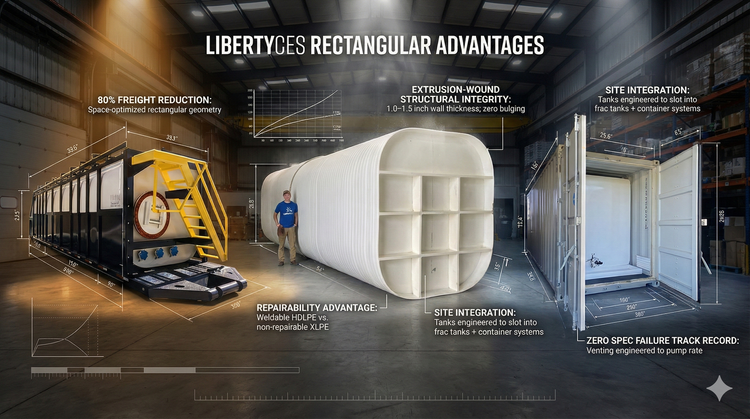
Rectangular HDPE & Polypropylene tanks engineered by James Riggins to fit where cylinders can’t — inside shipping containers, frac tanks, and tight plants. Up to 18,000 gallons in a rectangular footprint, extrusion-wound walls that don’t bulge, and freight savings up to 80% on day one.
If you searched for "rectangular tanks for shipping containers", "low freight cost chemical tanks", or "rectangular frac tank inserts", this is the page James wrote for you.

The Riggins Multiplier: Rectangular Tanks That Pay for Themselves Day One.
Most plastic tank “problems” are not material problems — they’re geometry and spec problems. Round tanks shipping mostly air. Footprints that don’t fit the building. Thin walls that bulge. No plan for containment. The Riggins Multiplier is James’ 30+ years of field experience applied to rectangular tanks: freight, footprint, wall thickness, containment, and venting all solved in one spec.
Rectangular Tank Types: Extrusion-Wound Muscle, Double-Wall Safety, Utility Workhorses.
1. Extrusion-Wound Rectangular Tanks (High-Performance)
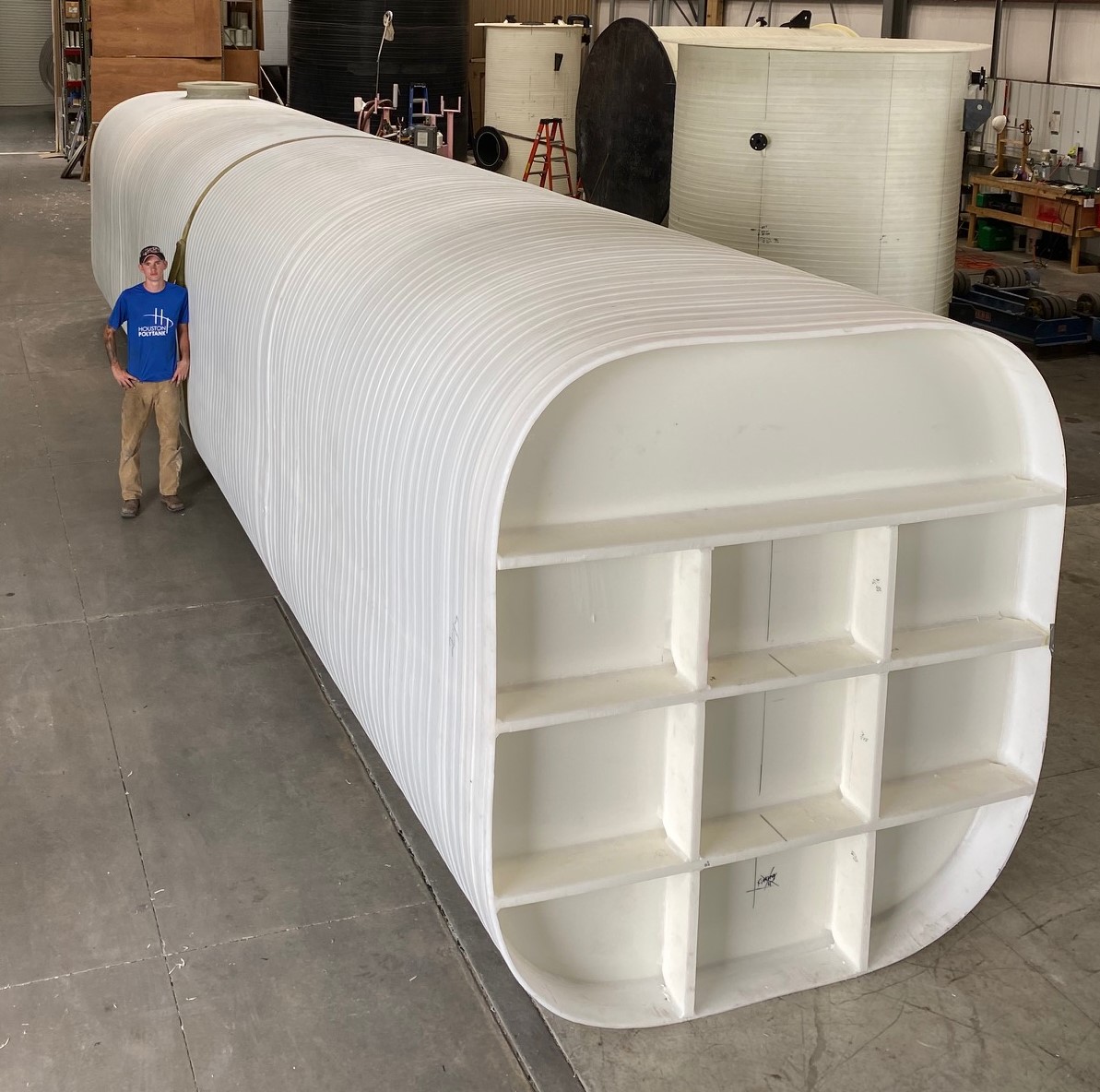
For the harshest duties and the tightest sites, James specifies extrusion-wound rectangular tanks, typically from Houston PolyTank. Material is extruded around a form, building up controlled wall thickness in inches — not millimeters.
- Wall Thickness: massive walls and reinforced ends designed for SG and duty, not catalog minimums.
- Geometry: true rectangular footprint with flat sidewalls that stay flat — no “elephant feet.”
- Capacities: from day tanks to rectangular vessels approaching 18,000 gallons.
- Repairability: weldable and repairable in the field to extend asset life.
- Integration: sized to slide into containers, frac tanks, or structural steel frames.
This is the upgrade path when round tanks keep breaking budgets — on freight, footprint, and failure.
2. Rectangular Double-Wall & Containment Systems
For sodium hypochlorite, sulfuric, and other high-risk chemicals, James often specifies rectangular double-wall “tank-in-a-tank” systems instead of single-wall tanks and concrete berms.
- 110%+ Containment: integral outer shells capturing leaks without new civil work.
- Interstice Monitoring: space between walls can be monitored for leaks or level.
- Freight + Containment: rectangular geometry that solves both shipping and SPCC in one move.
- Compact Footprints: ideal for plants where there is no room for a ring wall or dike.
The result: compliant hazmat storage without pouring concrete or expanding the building.
Configurations: Containers, Frac Tanks, Tight Rooms, and Mobile Utility.
Rectangular tanks exist to solve real-world constraints — freight lanes, site geometry, doors, beams, and hillsides. James treats each tank as a custom fit to the space and duty.
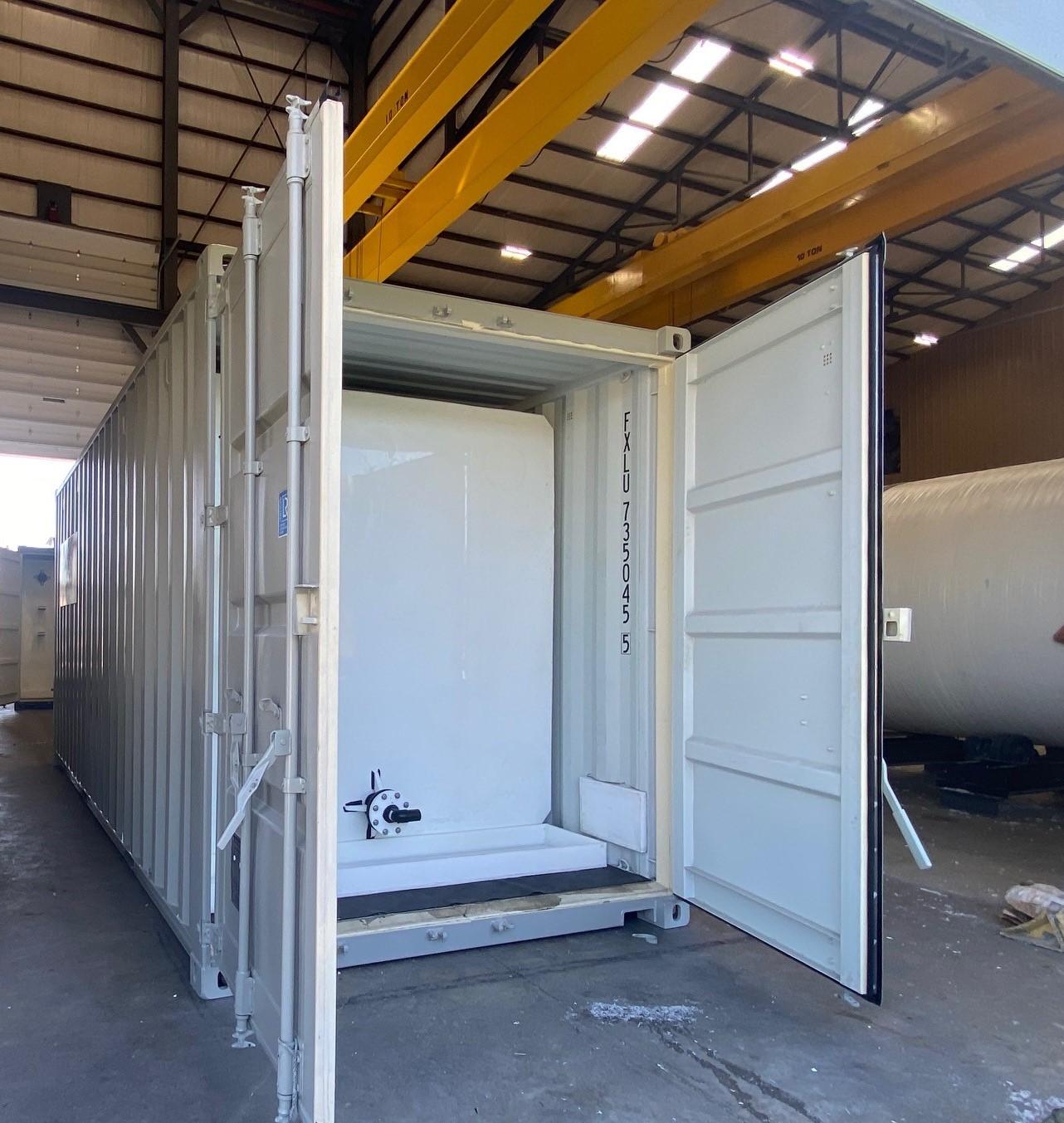
Rectangular tanks that slide into standard containers for maximum volume per load.
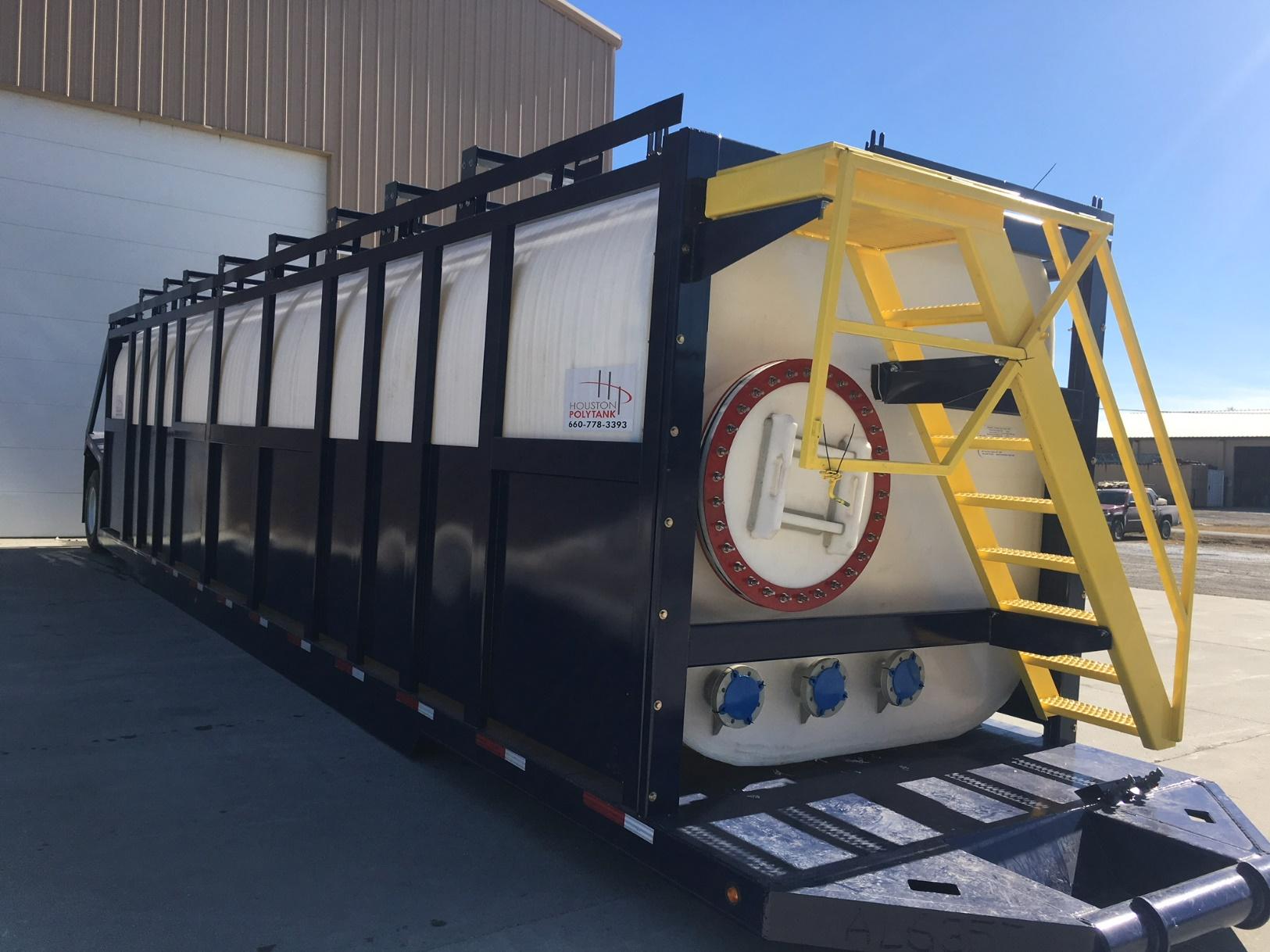
Drop-in rectangular liners for metal frac tanks, turning steel boxes into chemical reservoirs.
Flat-top tanks fitted under beams, mezzanines, and existing utilities.
Rectangular “loaf” and utility tanks mounted in pickups and trailers for field service.
Rectangular basins sized for 110% volume and easy leak inspection.
Rectangular tanks integrated with pumps, controls, and pipe racks on a single skid.
Critical Engineering: Flat Walls, Baffles, Venting, and Flex.
Rectangular tanks solve freight and footprint — but only if they’re engineered for movement, slosh, and vacuum. James’ checklist aims at long life, not just first cost.
Flat walls and corners sized for SG, fill/empty cycles, and seismic forces — not just catalog “minimums.”
Internal baffles for mobile tanks over ~1,000 gallons to tame slosh on hills and sudden stops.
Venting sized to pump-out rates so rectangular shells don’t implode from vacuum or overpressure.
No rigid pipes glued to flat walls; flexible connectors and expansion joints absorb movement.
Structural frames, tie-downs, and lift lugs tuned to handling, wind, and seismic requirements.
Nozzel schedules, level instruments, and leak detection planned from day one with SCADA-ready monitoring.
Where Rectangular Tanks Make Sense (and Win Financially).
Rectangular tanks are not for everything — they are for projects where freight, space, or containment is the pinch point. James’ job is to know when they are the multiplier and when a standard cylinder is just fine.
The Bottom Line: Don’t Pay to Ship Air.
One rectangular spec can eliminate a truckload of freight, unlock space you already own, and prevent a six-figure failure. James will tell you when a rectangular tank is the move — and when a standard cylinder is all you need.
Talk to James Request a Rectangular Spec
*Freight savings depend on route, capacity, carrier, and container type. James will run the math on your specific project.
Rectangular Tank FAQ
Why choose a rectangular tank instead of a cylindrical tank?
Rectangular tanks make sense when freight and footprint are the main constraints. They can pack far more volume into a standard container or tight room than a round tank, and they can be shaped to existing walls, beams, and frac tanks. Cylindrical tanks are still ideal where freight and space are easy and standardization matters more than geometry.
Can you fit a rectangular tank inside a shipping container?
Yes. James routinely sizes rectangular tanks to 20' and 40' container interiors, including door clearances and corner castings. The goal is to maximize gallons per container while preserving access for nozzles, vents, and lifting points.
Are extrusion-wound rectangular tanks repairable?
One major advantage of extrusion-wound HDPE and Polypropylene is that they are weldable and field-repairable. If damage occurs, the tank can often be reinforced or patched in place, extending service life instead of forcing early replacement.
Do rectangular tanks need external support cages?
Properly specified extrusion-wound rectangular tanks are designed to stand on their own without external cages. James sizes wall thickness, corner reinforcement, and supports so the geometry works under your specific SG, temperature, and duty cycle.
Can Liberty integrate pumps, skids, and controls with the tank?
Yes. Liberty routinely integrates rectangular tanks with chemical feed skids, transfer pumps, and monitoring & automation into a single engineered system.