
EPDM Compatibility Guide for Chemical Valves, Seals, Gaskets & O-Rings
EPDM can be an excellent elastomer for the right chemical service — but it is not universal. Chemical name, concentration, temperature, pressure, valve type, seat material, seal material, and diaphragm construction all determine whether EPDM is the correct spec.
What is EPDM compatible with?
EPDM is commonly compatible with water, steam, hot water, many caustic solutions, glycol, and some oxidizing chemical services. EPDM is generally not a good choice for petroleum oils, fuels, hydrocarbons, and many solvent applications. Final compatibility depends on chemical concentration, temperature, pressure, exposure time, and the valve or seal design.
EPDM is not good or bad by itself. EPDM is either correctly specified or incorrectly specified. In chemical valve service, that difference can decide whether a valve lasts years or fails in months.
Valve Material Resources Built Around the Same Spec Path
Use this EPDM guide as the pillar page, then move into the deeper pages based on the exact valve material, chemical service, or vendor platform you are trying to specify.



EPDM Chemical Compatibility Chart
Use this table for initial screening. Generic compatibility ratings are useful, but they are not a substitute for a full valve specification — especially in sodium hypochlorite, caustic, or high-temperature service.

| Chemical / Fluid | EPDM Fit | Valve Spec Risk |
|---|---|---|
| Water / Potable Water | Usually Strong | Verify temperature; disinfectant additives matter |
| Steam / Hot Water | Often Strong | Check temperature rating for seat and diaphragm |
| Sodium Hydroxide / Caustic Soda | Often Strong | Concentration and heat still matter; verify both |
| Sodium Hypochlorite | Verify Carefully | Oxidizer exposure, off-gassing, seat, seal & venting all matter |
| Glycol | Often Compatible | Verify blend and additives; formulations differ |
| Petroleum / Lubricating Oils | Poor Fit | Swelling and seal loss; use a different elastomer |
| Fuels / Gasoline / Diesel | Avoid | Poor fit for gasoline, diesel, kerosene, most fuels |
| Hydrocarbons (Aliphatic / Aromatic) | Avoid | Not appropriate for petroleum / hydrocarbon service |
| Solvents (Ketones, Esters, Alcohols) | Mixed | Depends on solvent family, concentration & exposure |
Generic compatibility charts are helpful for screening, but they are not enough for sodium hypochlorite service. Hypochlorite systems can fail because of trapped off-gas, wrong seat material, wrong O-ring material, incorrect diaphragm construction, or missing venting details.
Chemicals and Fluids EPDM Usually Handles Well
Water and Wastewater Service
EPDM is commonly used in water and wastewater systems because it performs well in many water-based applications. Temperature, disinfectants, additives, and valve design still matter — a system running chloramines or high-concentration disinfection requires a closer look at seat and seal selection.
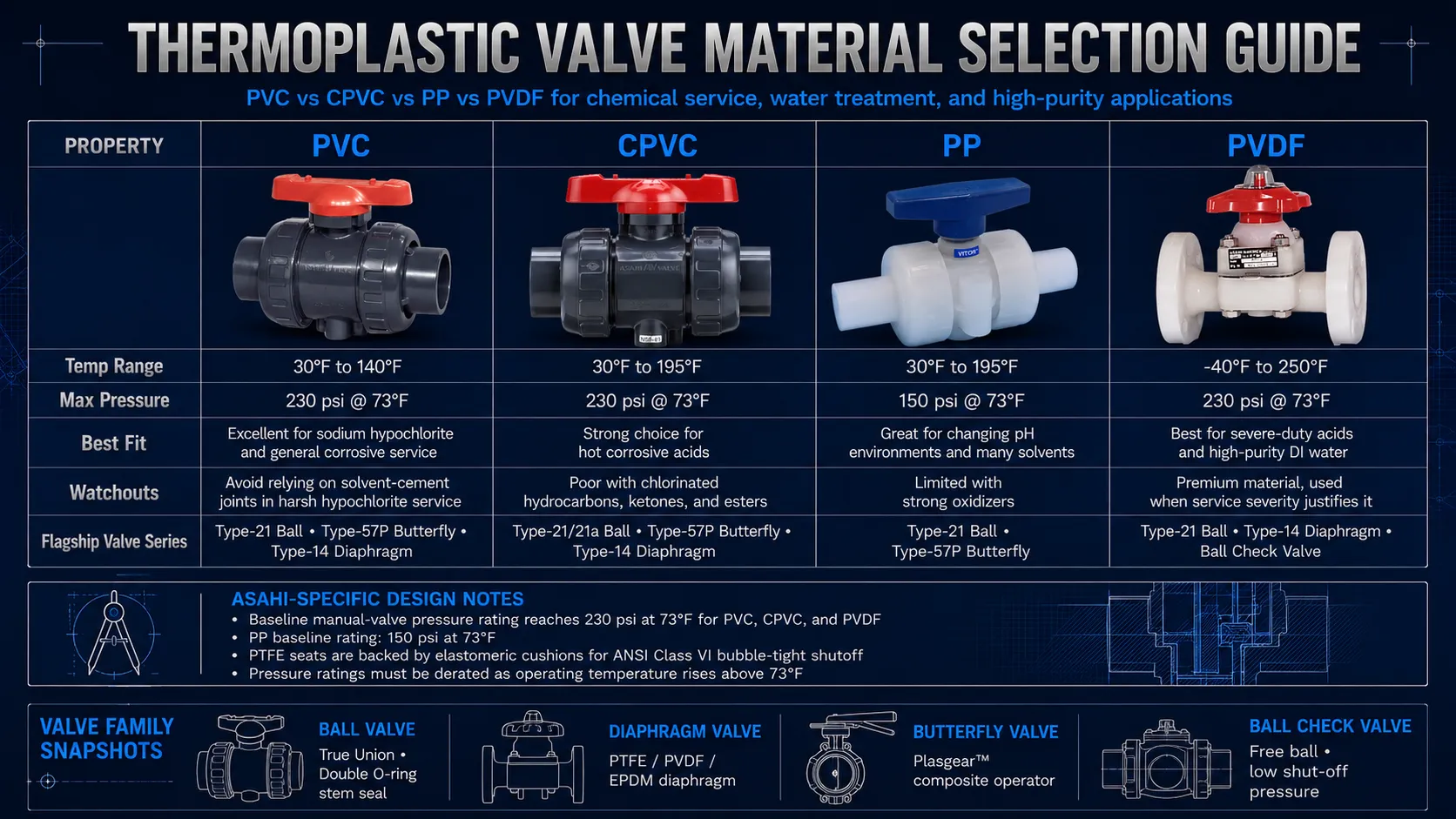
Asahi America Thermoplastic Valve Guide — body & trim material selectionSodium Hydroxide and Caustic Soda
EPDM is often considered for sodium hydroxide and caustic soda service, but concentration and temperature must be checked before specifying the seat, seal, O-ring, or diaphragm material. Low-concentration caustic at ambient temperature is different from hot, concentrated sodium hydroxide in a continuous-flow process.
EPDM compatibility with sodium hydroxide is generally favorable in moderate conditions, but the valve manufacturer's specific data should always be verified against actual service conditions.
Glycol and Selected Cleaning Solutions
EPDM may be compatible with many glycol and water-based cleaning solutions, but additives can change the compatibility profile. Always verify the exact fluid blend — not just the general chemical family. A glycol system with corrosion inhibitors, biocides, or surfactant additives may behave differently than pure ethylene or propylene glycol.
Chemicals That Degrade EPDM Rubber
EPDM can swell, soften, crack, lose elasticity, or lose sealing force when it is used outside its chemical envelope. Petroleum oils, fuels, hydrocarbons, and many solvents are common problem areas. In a chemical valve, that failure may first show up as higher operating torque, poor shutoff, internal leakage, or repeat seal failure.
The problem is often misdiagnosed. The operator replaces the valve without changing the specification. The replacement fails again for the same reason.
Buna-N vs EPDM vs FKM vs PTFE — full elastomer comparisonEPDM Compatibility with Oil, Fuel, and Hydrocarbons
EPDM is generally a poor choice for petroleum oils, fuels, and hydrocarbon service. In those applications, EPDM can swell and lose sealing integrity. Swelling increases valve torque, distorts the seat, and eventually destroys shutoff capability.
Depending on the fluid, temperature, and equipment design, FKM, Buna-N/NBR, or another material may be more appropriate. The right choice depends on the specific hydrocarbon, temperature range, and whether the elastomer is a static seal or a cycling seat.
Compare major sealing materials: Buna-N vs EPDM vs FKM vs PTFEEPDM Compatibility with Sodium Hypochlorite
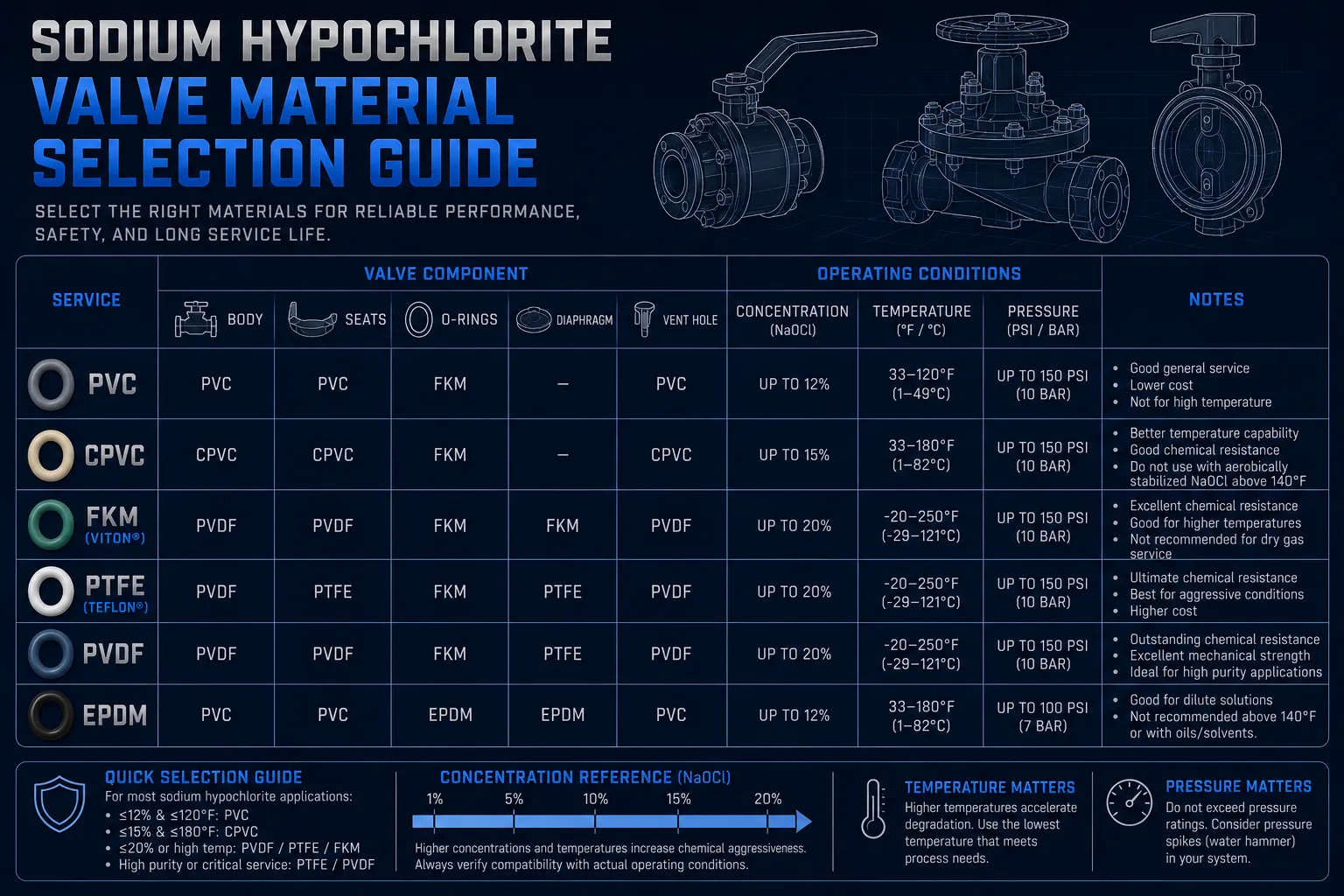
Sodium hypochlorite service should not be specified from a generic EPDM compatibility chart alone. Hypochlorite concentration, temperature, off-gassing, trapped cavity pressure, body material, seat material, O-ring material, diaphragm construction, and venting all matter.
In some systems, EPDM may be part of the correct configuration. In others, a PTFE seat, FKM-backed seat, composite diaphragm, vented ball, or different body material may be required. The variables interact — a valve that works at 10% sodium hypochlorite at ambient temperature may fail at 15% with a 20°F temperature increase.
Do not guess on hypochlorite service.
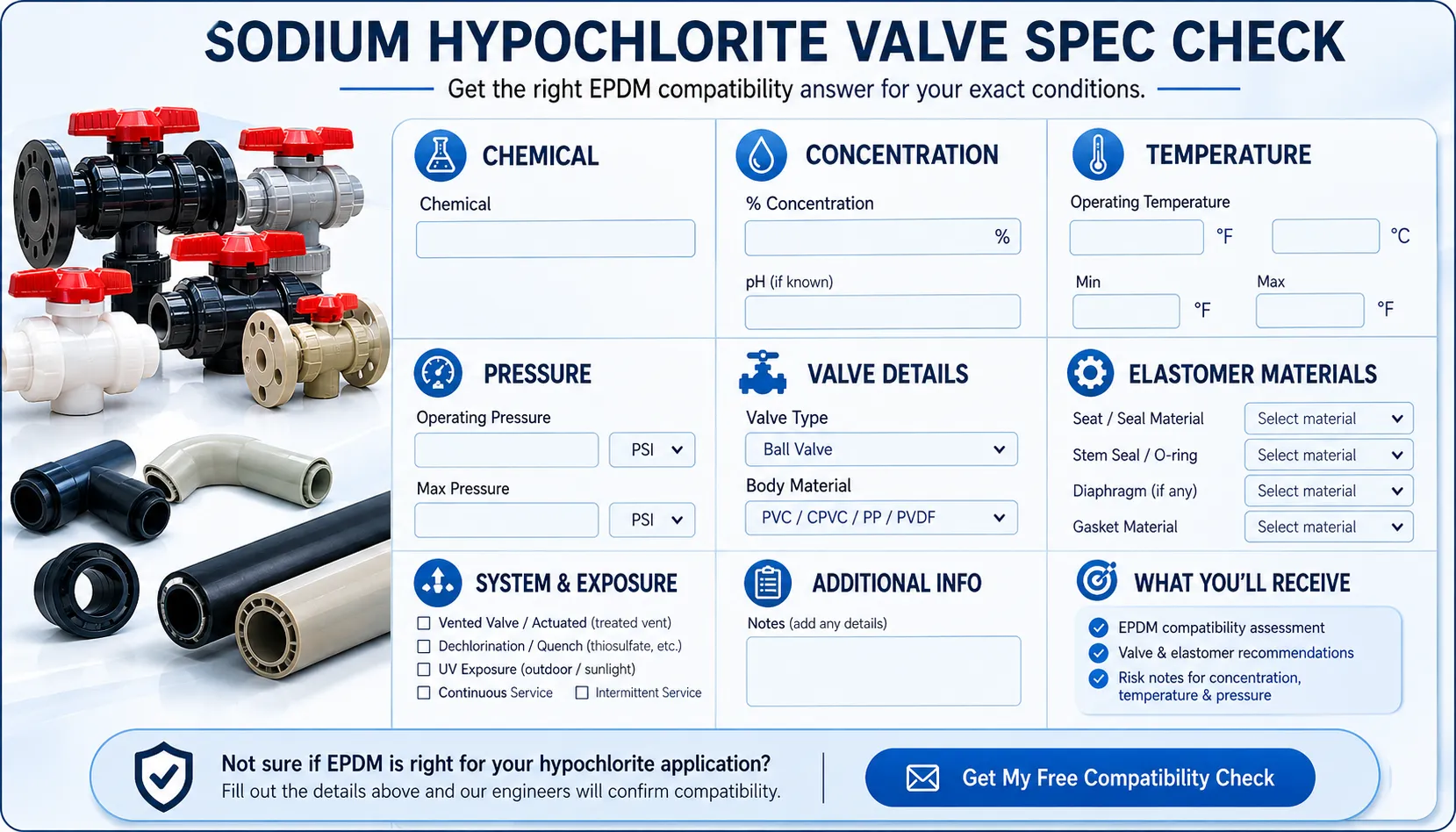
Send LibertyCES the chemical concentration, temperature, pressure, and valve type. We'll help verify the correct body material, seat, seal, O-ring, diaphragm, and venting configuration.
Run the Hypochlorite Valve Spec CheckEPDM vs FKM vs PTFE vs Buna-N Chemical Compatibility
No single elastomer covers all chemical valve services. The correct material depends on the fluid, concentration, temperature, and the mechanical role of the seal in the valve assembly.
| Material | Often Used For | Watch Out For |
|---|---|---|
| EPDM | Water, steam, caustic, glycol, some oxidizing services | Poor in petroleum oils, fuels, and hydrocarbons |
| FKM (Viton) | Hydrocarbons, oils, fuels, many solvents, some acids | Weak in steam, hot water, ketones, strong alkalis, some bleach |
| PTFE | Broad chemical resistance, aggressive chemicals, high-purity | Less flexible alone; may need backing / composite construction |
| Buna-N / NBR | Oils, fuels, some hydrocarbons | Not a universal chemical-service elastomer; verify per fluid |
Buna-N vs EPDM vs FKM vs PTFE — full side-by-side guide
EPDM O-Ring and Gasket Compatibility
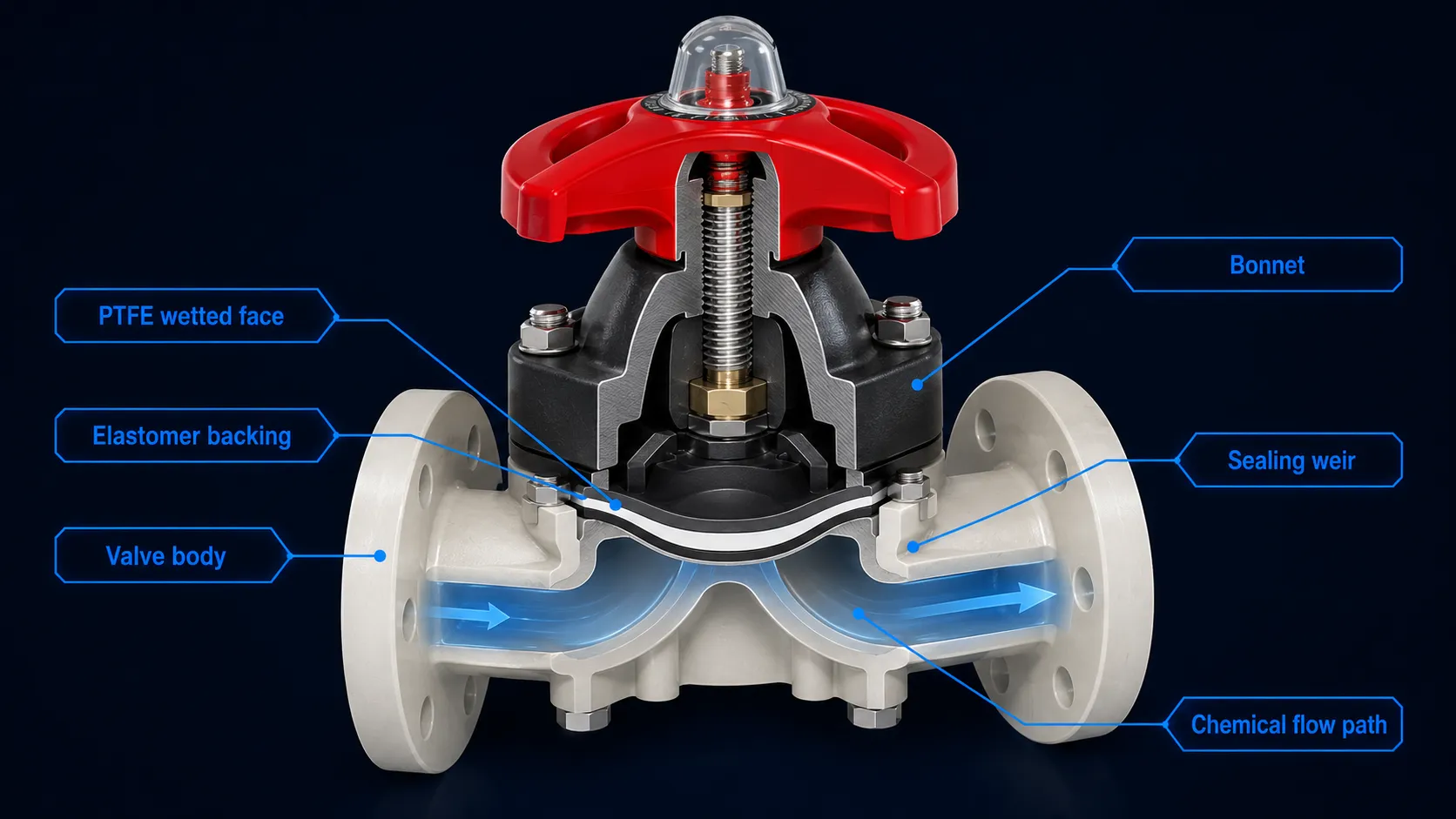
EPDM compatibility depends on the part's role in the assembly. An EPDM O-ring, gasket, seat backup, and diaphragm backing layer may all experience different chemical exposure and mechanical stress in the same valve.
A static EPDM gasket may survive in a service where a cycling valve seal fails. A diaphragm backing layer may perform differently than a fully wetted EPDM diaphragm. Form factor, thickness, durometer, compression set, and contact area all affect how an EPDM component performs in chemical service.
Replacing EPDM seals based on part number alone — without verifying the service conditions have not changed — is one of the most common causes of repeat valve failure in chemical dosing and disinfection systems.
How to Verify EPDM Compatibility Before Specifying a Chemical Valve
A compatibility chart tells you whether EPDM has been used in a service. It does not tell you whether EPDM is correct for your specific valve type, concentration, temperature, operating pressure, and system design. That requires a full spec check.
The LibertyCES Elastomer Check
- Identify the exact chemical name
- Confirm concentration percentage or ppm
- Confirm operating temperature: minimum, maximum, and continuous
- Confirm pressure: operating and surge
- Identify valve type: ball, butterfly, diaphragm, or check
- Confirm body material
- Check seat material
- Check seal and O-ring material
- Check diaphragm construction if applicable
- Account for off-gassing or trapped cavity pressure
- Verify manufacturer configuration for that service
- Document the final spec
Need help checking a sodium hypochlorite valve?
LibertyCES will help verify the correct body material, seat, seal, O-ring, diaphragm, and venting configuration for your service conditions.
Start the Hypochlorite Valve Spec CheckEPDM Compatibility FAQs
What chemicals are compatible with EPDM rubber?
EPDM is commonly used with water, steam, hot water, caustic solutions, glycol, and some oxidizing services. Compatibility still depends on concentration, temperature, pressure, exposure time, and equipment design. A chart rating is a starting point, not a final specification.
What chemicals are not compatible with EPDM?
EPDM is generally a poor fit for petroleum oils, fuels, hydrocarbons, and many solvents. In those services, EPDM can swell, soften, or lose sealing force. In a valve, that typically shows up as increased torque, internal leakage, or seat damage before complete external failure is visible.
Is EPDM compatible with sodium hydroxide?
EPDM is often used in sodium hydroxide and caustic service, but concentration and temperature must be checked before specifying valve seals, O-rings, or diaphragm materials. Moderate-concentration caustic at ambient temperature is typically manageable. Hot, concentrated sodium hydroxide in continuous service requires closer review of the full valve specification.
Is EPDM compatible with sodium hypochlorite?
EPDM may be part of some sodium hypochlorite-compatible configurations, but hypochlorite service should be verified carefully because concentration, temperature, off-gassing, valve design, seat material, seal material, diaphragm construction, and venting all matter. Do not rely on a generic EPDM compatibility chart for sodium hypochlorite service.
Is EPDM compatible with oil?
EPDM is generally not recommended for petroleum oils, fuels, and hydrocarbon service because it can swell and lose sealing integrity. FKM or Buna-N/NBR is typically more appropriate for oil service, depending on the specific fluid and temperature range.
Is EPDM the same as FKM or Viton?
No. EPDM and FKM are different elastomers with different compatibility ranges. EPDM is often stronger in water, steam, and caustic applications, while FKM is often used in oils, fuels, hydrocarbons, and many solvent services. They are not interchangeable and should not be substituted without verifying the complete service conditions.
Is EPDM the same as PTFE?
No. EPDM is a flexible rubber elastomer. PTFE is a fluoropolymer with broad chemical resistance but different mechanical behavior. In some diaphragm designs, PTFE may be used as the wetted layer with EPDM as a backing layer — the two materials serve different roles in the same assembly.
Before You Specify EPDM in Hypochlorite Service, Check the Full Valve Spec.
EPDM compatibility charts are useful, but sodium hypochlorite systems can fail for reasons a generic chart does not show: concentration, temperature, trapped off-gas, body material, seat material, O-ring material, diaphragm construction, and venting. Replacing the same valve configuration without changing the specification is the most common cause of repeat failure in chemical dosing systems.
Send LibertyCES your service conditions and we'll help verify the correct valve configuration.
Questions? Contact LibertyCES directly.