Horizontal Tanks — Low Profile. Mobile-Strong. Audit-Clean.
This comprehensive response details the characteristics of horizontal tanks supplied by Liberty Chemical & Equipment Supply, Inc. (Liberty CES) and explains why they must be specified by James Riggins: SG rating, engineered hoops, tie-downs, valve guards, opaque/insulated packages, and correct outlets—so your mobile or day-tank duty runs safe for 20+ years and passes audits.

The James Factor: Horizontal Specs that Don’t Crack, Loosen, or Spill
James matches geometry, SG rating, hoop count, tie-downs, outlets/valves, and UV/opacity—so your tank rides stable, transfers clean, and passes audits.
Related systems: Monitoring & Automation · Chemical Feed Skid Systems · Chemical Transfer Pumps
Horizontal Types: Pick the Right Style for Your Duty
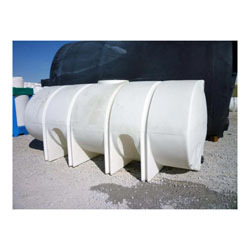
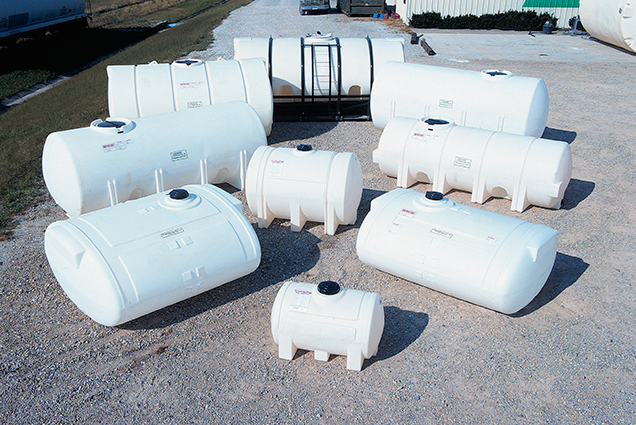
Horizontal Leg Tanks (with Hoops): mobile/nurse service; trailer/truck mounting; lower center of gravity; requires hoops/bands, tie-downs, valve guards.
Elliptical Leg Tanks: wider footprint, even lower CG for transport stability; often 1.5 SG—upgrade to 1.9 SG for rough routes/denser fluids.
Horizontal Storage (Low Profile): indoor day-tanks where height is tight; translucent walls w/ gallon marks; correct outlet sizing prevents shear.
PCO / Utility Horizontals: compact 30–325 gal for pest control, washdown, service trucks; frequently 1.9 SG in small footprints.
Need pumps or controls, too? See Chemical Transfer Pumps and Monitoring & Automation.
Applications & Industries
Ideal where mobility, low headroom, and safe transfers matter—without cracked fittings or slosh surprises.
The Bottom Line: Stable Transport, Clean Transfers, Long Life
Get the Right Horizontal Tank, Guaranteed.
Avoid guesswork. Get a free consult with James Riggins to match SG, hoops, tie-downs, outlets, and UV packages to your route, chemistry, and duty.
*NSF/ANSI 61 and food-contact availability varies by model/vendor. We’ll confirm at spec.
Horizontal Tank FAQ
When should I choose a horizontal vs. vertical or cone bottom?
Choose horizontal for mobility and low headroom; vertical for lowest cost per gallon; cone bottom for 100% drain-out purity or sludge handling.
Do I really need hoops on leg tanks?
Yes—on most leg tanks ≥ ~730 gal, hoops/bands are required to control slosh and distribute loads during transport and braking.
What SG rating should I pick?
1.35 / 1.5 / 1.9 SG depends on fluid density and duty (route roughness, stop/start, speed). James sizes SG and hoop count to your real load case.
Why opaque for bleach (NaOCl)?
Opaque walls reduce UV-induced degradation. We also add insulation/heat-trace where dewpoint or freeze risk matters.
Can Liberty integrate pumps, skids, and monitoring?
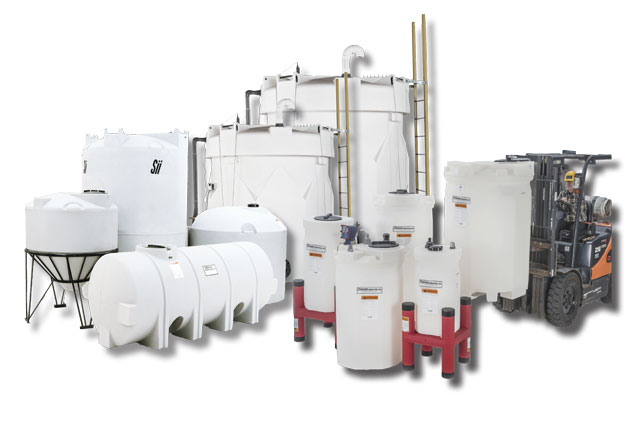
Yes. Single-point accountability—tanks, feed skids, transfer pumps, and SCADA-ready controls—all spec’d by James.